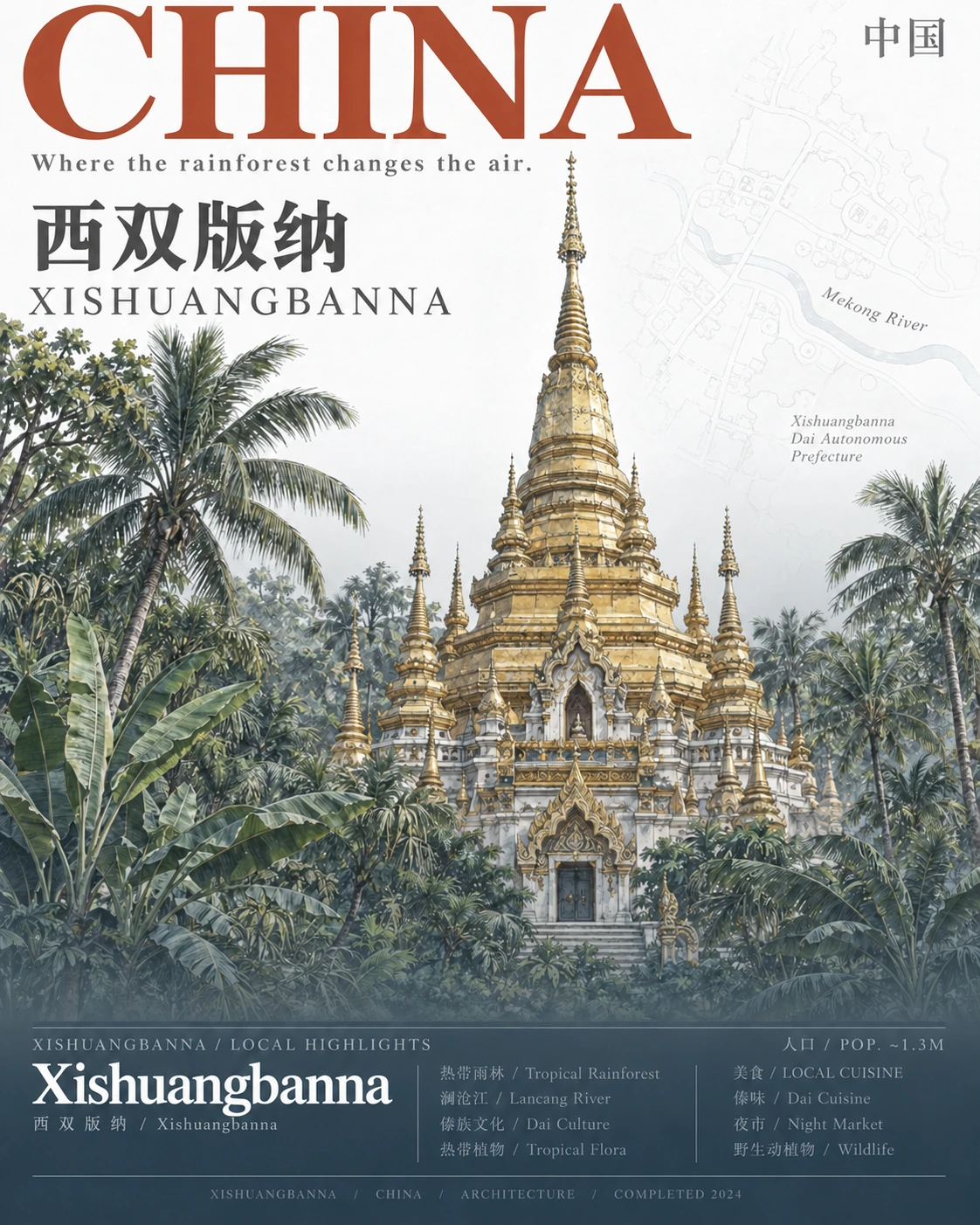
Rainforest, river & Dai culture
Xishuangbanna
China’s tropical southwest, where rainforest ecology, Mekong-region connections and Dai cultural life meet around Jinghong.
City overview
Jinghong, rainforest and Dai culture
Planning a visit to Xishuangbanna
Planning notes checked 16 October 2026. Day plans are suggestions; check current entry and transport arrangements for your dates.
Allow four full days for Jinghong and a few selected outings in Xishuangbanna. A botanical-garden day, a tea visit and a Pu’er excursion use different routes; choose which matters most before booking the hotels.
Four days based around Jinghong and one main excursion
- Day 1: Arrive in Jinghong, settle in and choose a short evening walk. Keep the first night light after a long transfer.
- Day 2: Visit Manting Park and a selected cultural site, checking access and behaviour at any active religious venue.
- Day 3: Give the tropical botanical garden at Menglun its own day, including the return journey. Choose the route inside the garden before setting out.
- Day 4: Choose a booked village or tea-focused outing, or keep a slower city day before departure.
Menglun is a separate excursion
The Chinese Academy of Sciences places its Xishuangbanna Tropical Botanical Garden in Menglun, Mengla County. It is not a Jinghong city park. Arrange the return transfer and ask about garden sections, walking distance and permitted internal transport before deciding how much to cover.
Use the garden’s current visitor notices for admission and any guided activities. A botanic-garden visit and a wildlife-viewing trip are different experiences. Do not build the day around a promise of seeing wild elephants or another particular animal.
Keep the base and cultural visits practical
A Jinghong base suits the city days; a night near an outlying visit may reduce a return journey if your wider route allows it. Check the actual location of each hotel, including any nights described simply as “Xishuangbanna” or “tea country.”
Allow shaded breaks on outdoor walks and keep a shorter alternative for heavy rain. At temples and villages, follow local dress and photography rules and ask before entering private areas. Book a specific host or activity if that is the purpose of the excursion; arriving at a village does not guarantee a demonstration.
Compare the five-day sample with this plan
Our five-day Xishuangbanna sample includes a Pu’er forest-park visit and other stops outside central Jinghong. The Menglun garden day above is an alternative to discuss, not an inclusion to assume. If connecting through Kunming, allow its own transfer and sightseeing time. Read the travel preparation guides before confirming the itinerary.
01 / Place
A different China, by climate
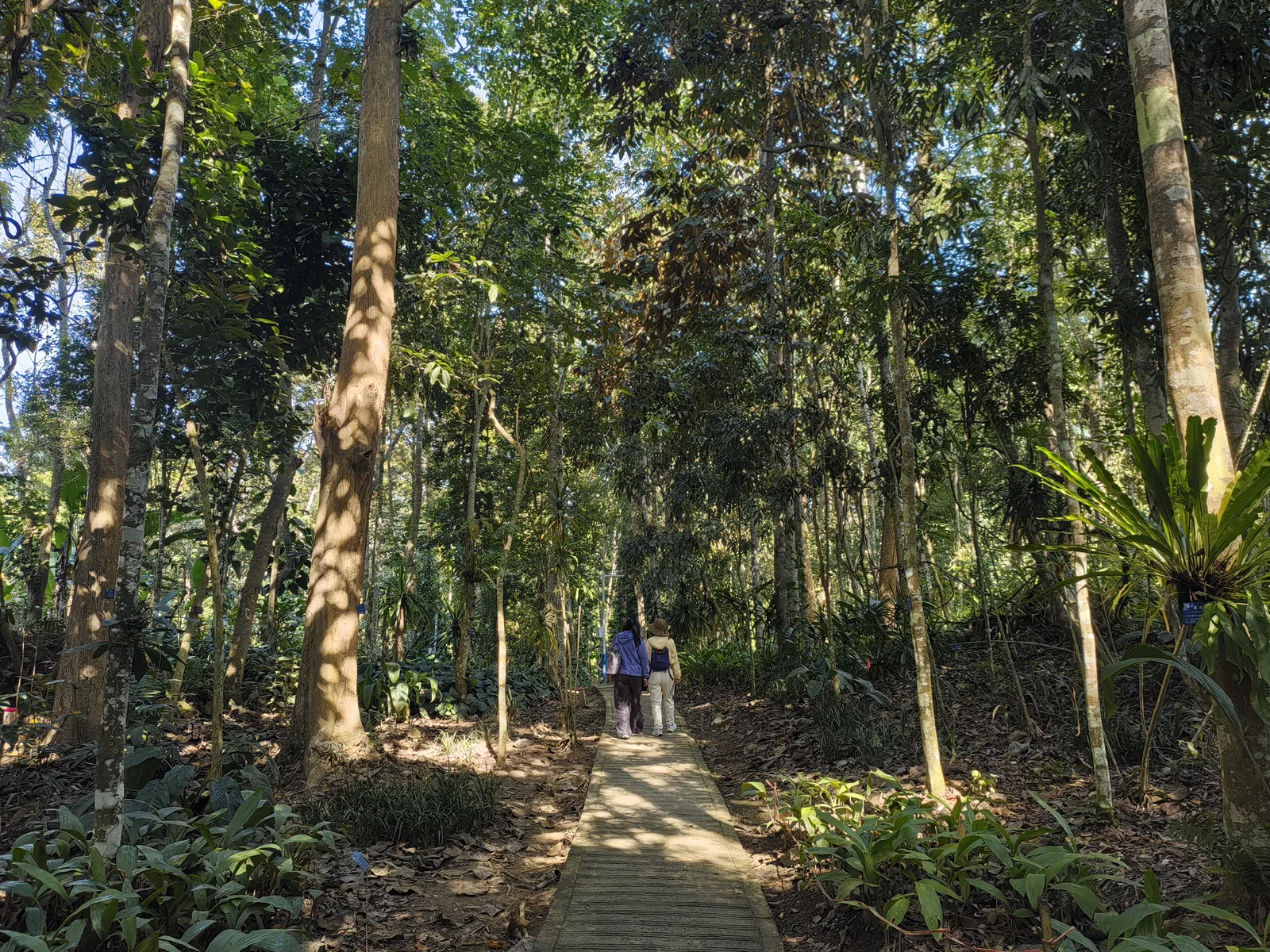
Xishuangbanna feels distinct because of climate before anything else: tropical rain, dense plant life, river humidity and a slower sensory rhythm. The botanical gardens and forest landscapes offer a serious introduction to the region’s biodiversity.
Treat the rainforest as a living system, not a backdrop. Local ecological knowledge and careful routes make a visit more meaningful.
02 / Culture
Dai culture and regional connections
Jinghong and the surrounding area are shaped by Dai traditions, Theravada Buddhist practice and long-standing connections across the Mekong region. Food, textile, architecture and seasonal festivals offer entry points, but should be approached through local voices rather than staged spectacle.
Markets and meals are especially revealing: herbs, fruit, smoke and shared dishes make the region’s cultural geography tangible.
03 / Living landscape
A river city below the hills
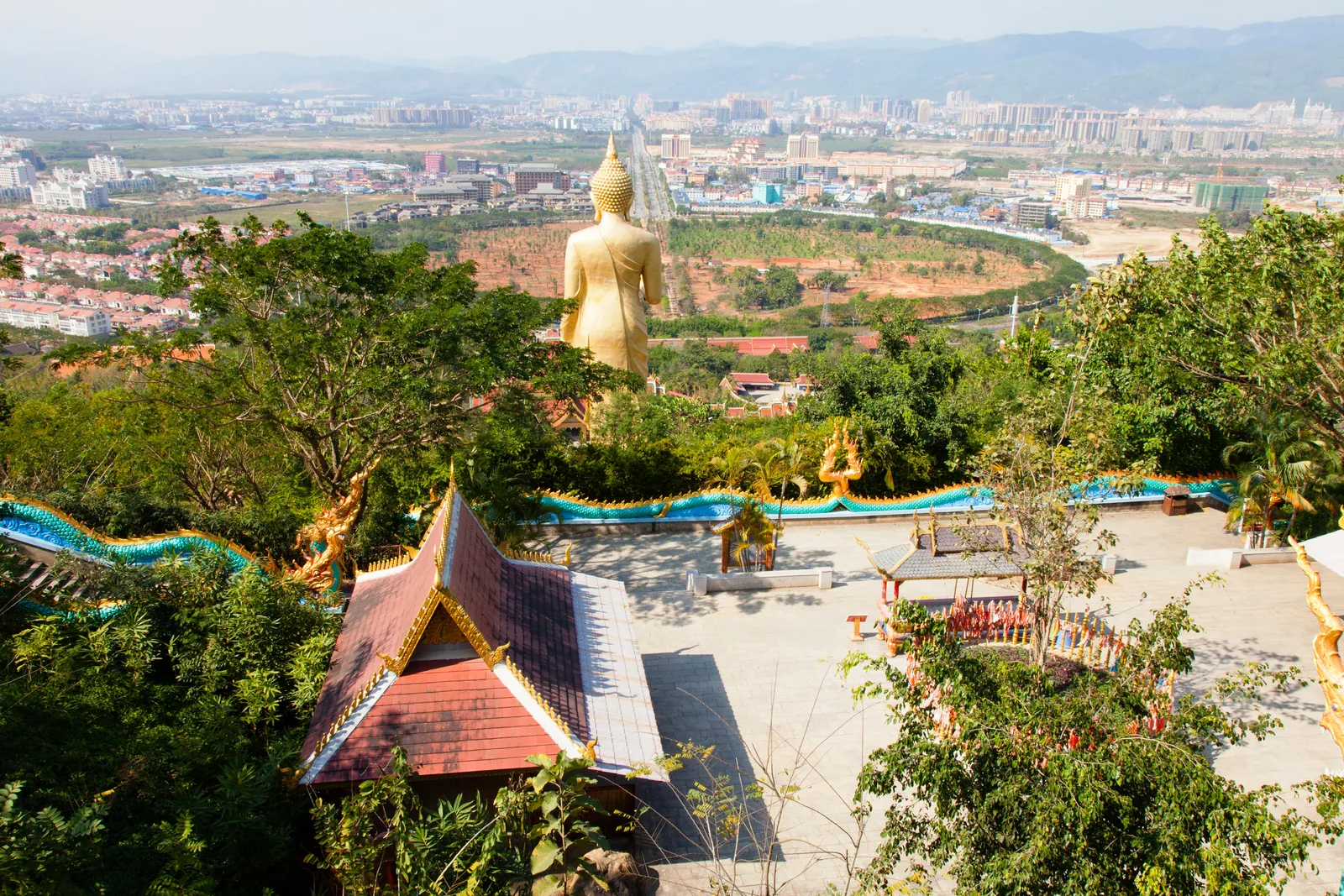
Jinghong offers an urban counterpoint to the rainforest, with riverside life, temple views and a subtropical public culture. Its identity is regional and layered, not merely exotic.
Good to know
Respect living culture
Seek community-led encounters rather than treating traditions as performance.
Plan for tropical conditions
Leave time for breaks in the shade and pack rainwear and insect repellent for the conditions. Keep a shorter outing available if heavy rain changes the plan.
Pair town and forest
Jinghong gives context to the ecology and cultural life beyond it.
A closer reading
Five lenses on Xishuangbanna.
History
The long view
Culture
Everyday culture
Landscape
Ground and horizon
Food
At the table
Now
A city in motion
Watch
See Xishuangbanna in motion.
A visual companion selected for its places, people and everyday pace.
Plan with ChinaVela
Travel deeper, with the right local context.
Talk to a travel specialistPlan your visit
Journeys that include this destination: Xishuangbanna rainforest escape.
Other city guides: Kunming city guide · Dali city guide.
All China city guides · Explore China journeys · Before you go to China