


China, made closer.
Make China yours,
one journey at a time.
Describe what you want to see, taste or feel. We’ll help connect the places, people and experiences.
Chaoshan · Guangdong
Find your next journey
Journeys shaped
around you


Many places. One personal journey.
The experience collections
Find what moves you.
Six ways to explore China. Follow a curiosity and see where it takes you.
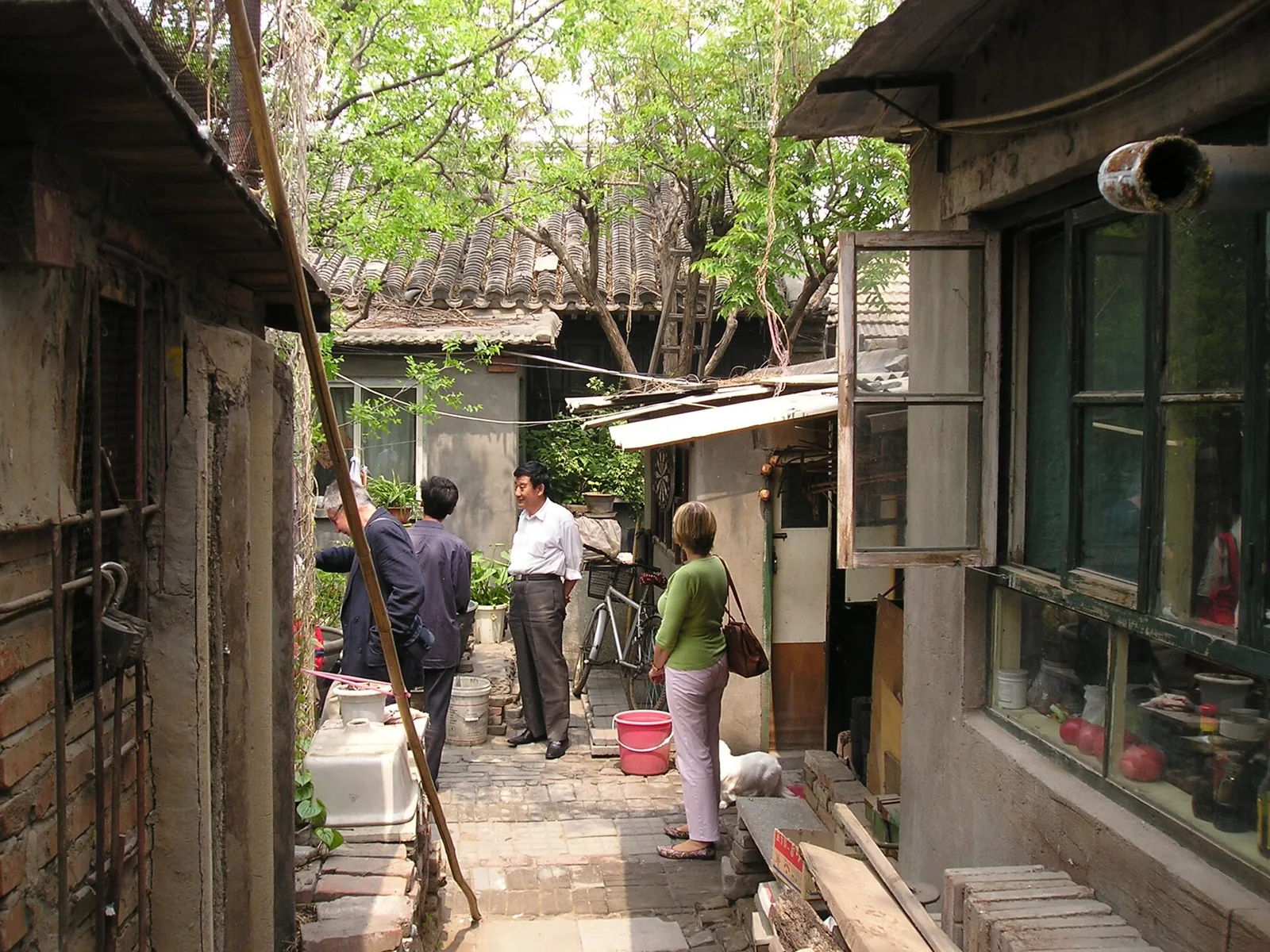
Imperial & cultural heritage
Ancient capitals. Living traditions.
Explore collection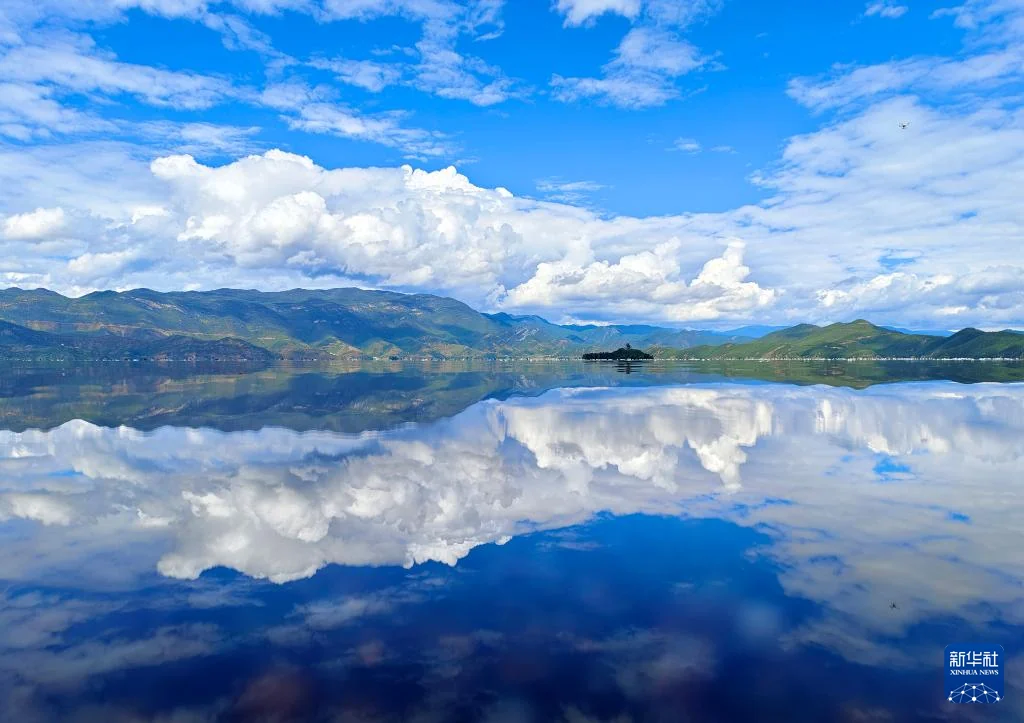
Southwest discoveries
Tea country, lakes and mountain towns.
Explore collection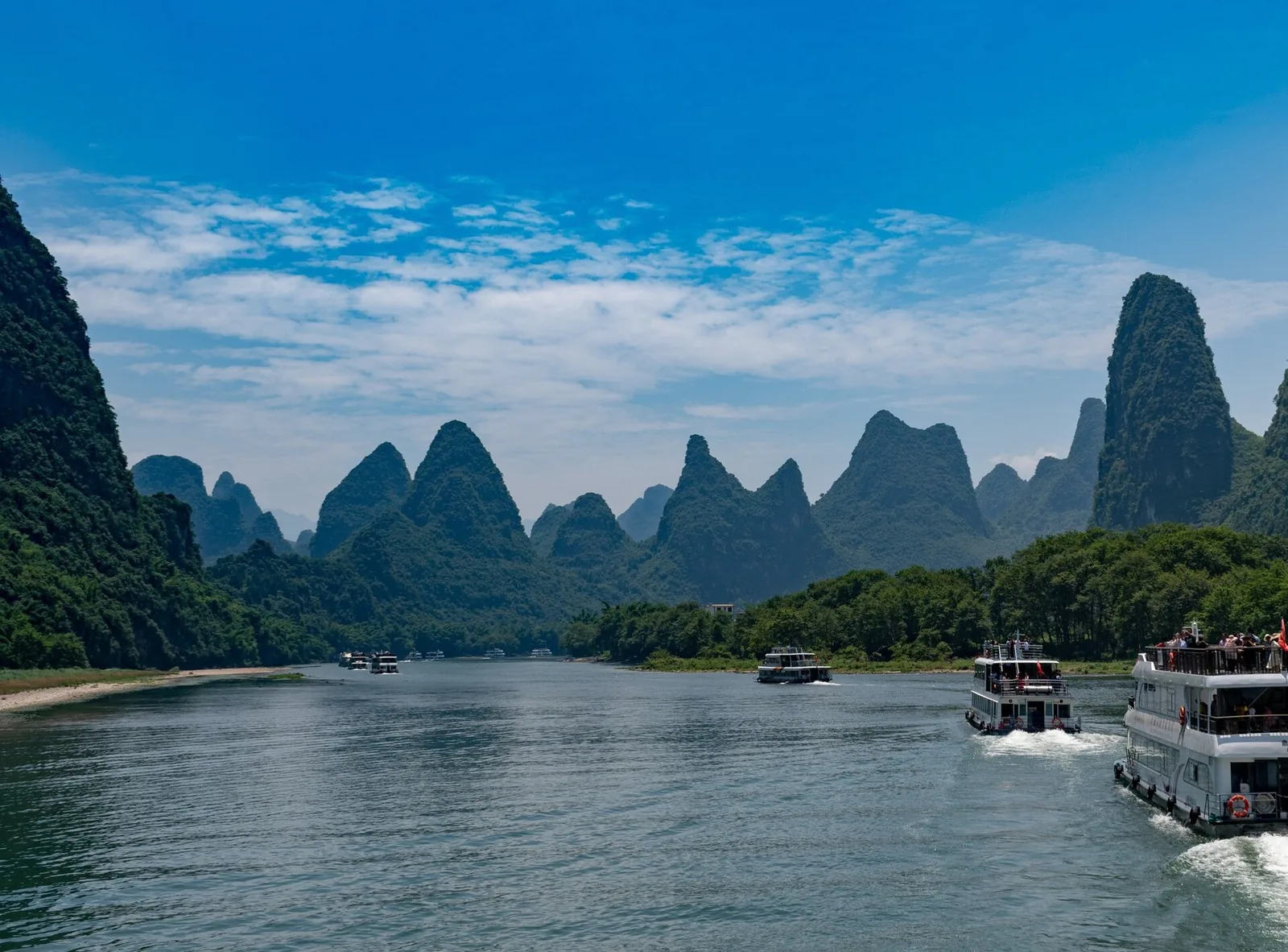
China classics
The places you have always pictured.
Explore collection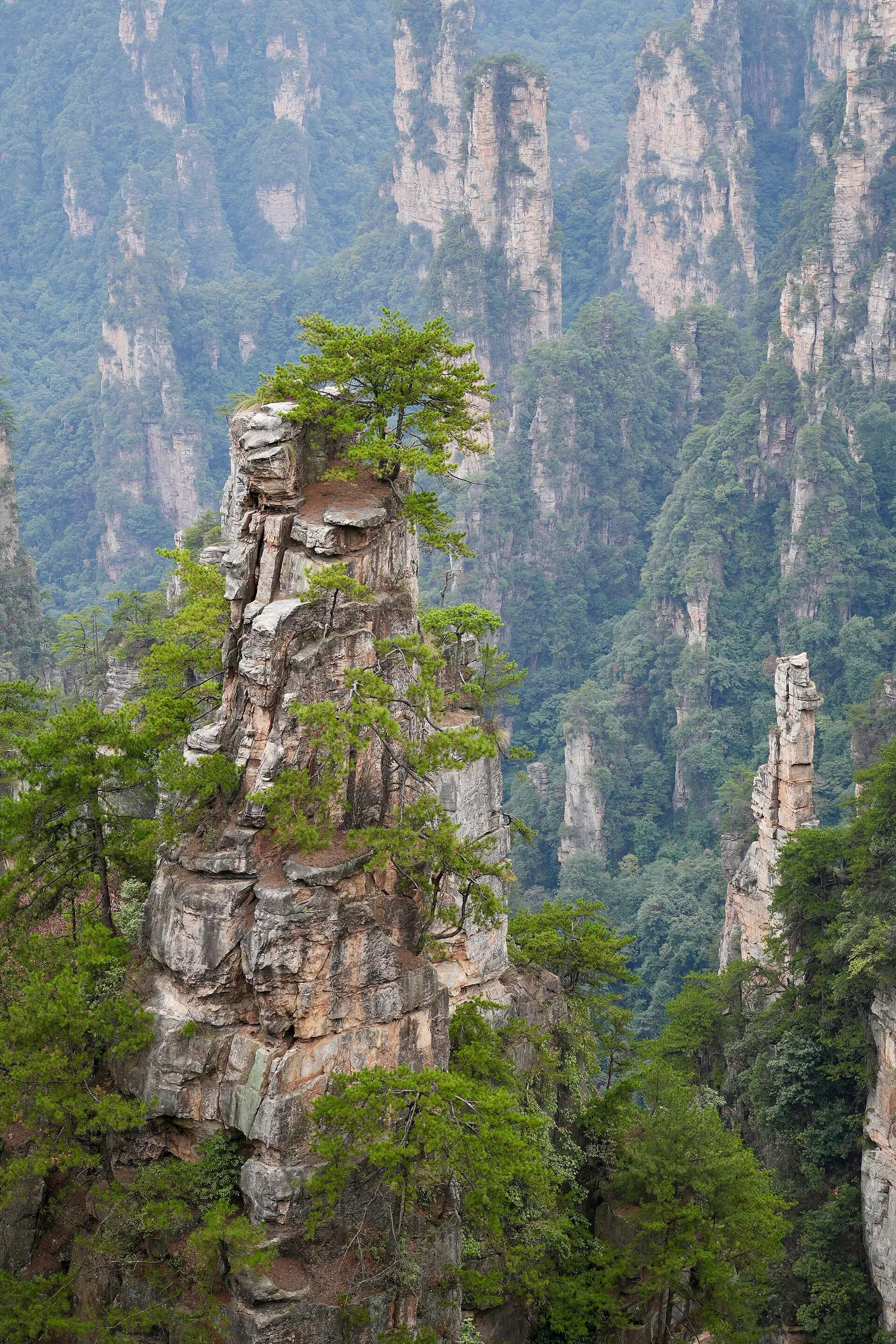
Peaks, rivers & forests
Follow the landscape a little further.
Explore collection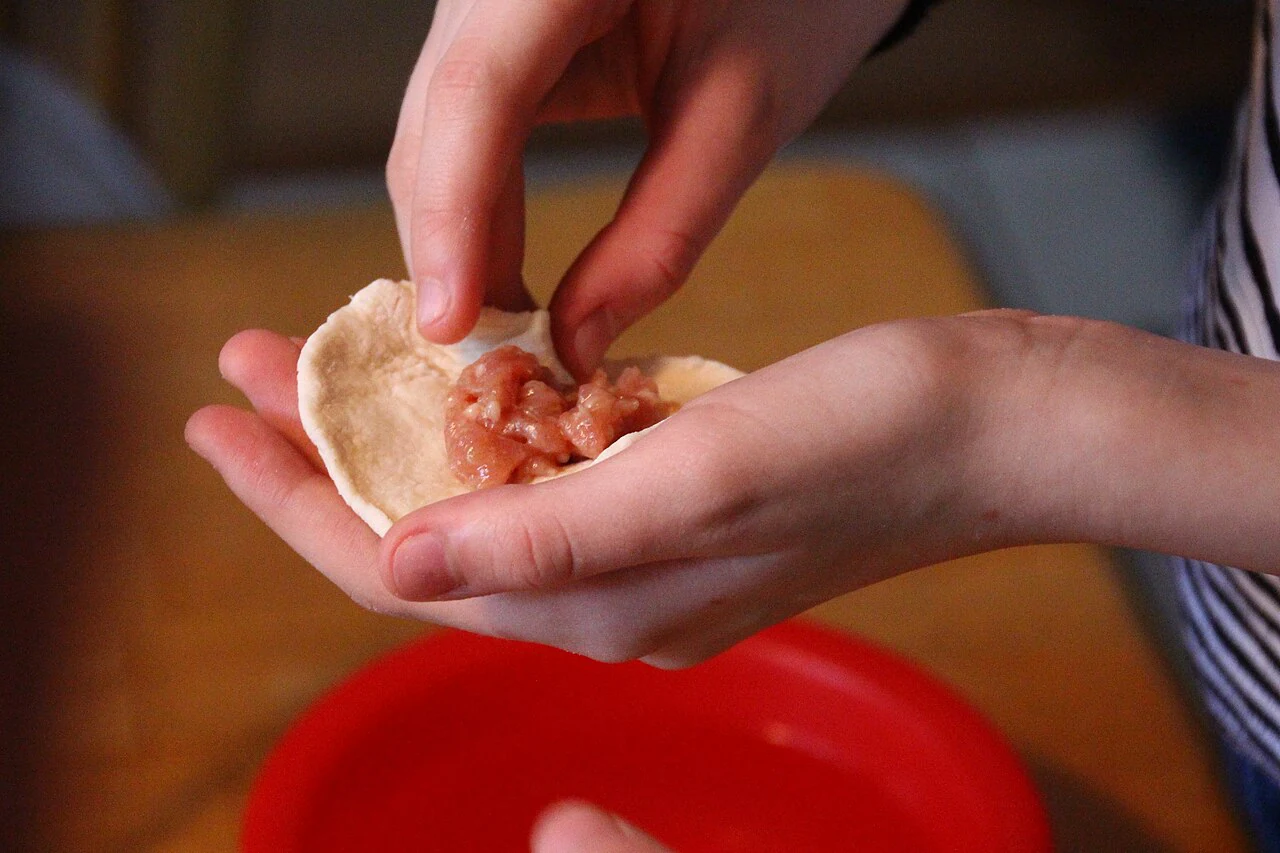
Taste of China
Discover a place through its flavours.
Explore collection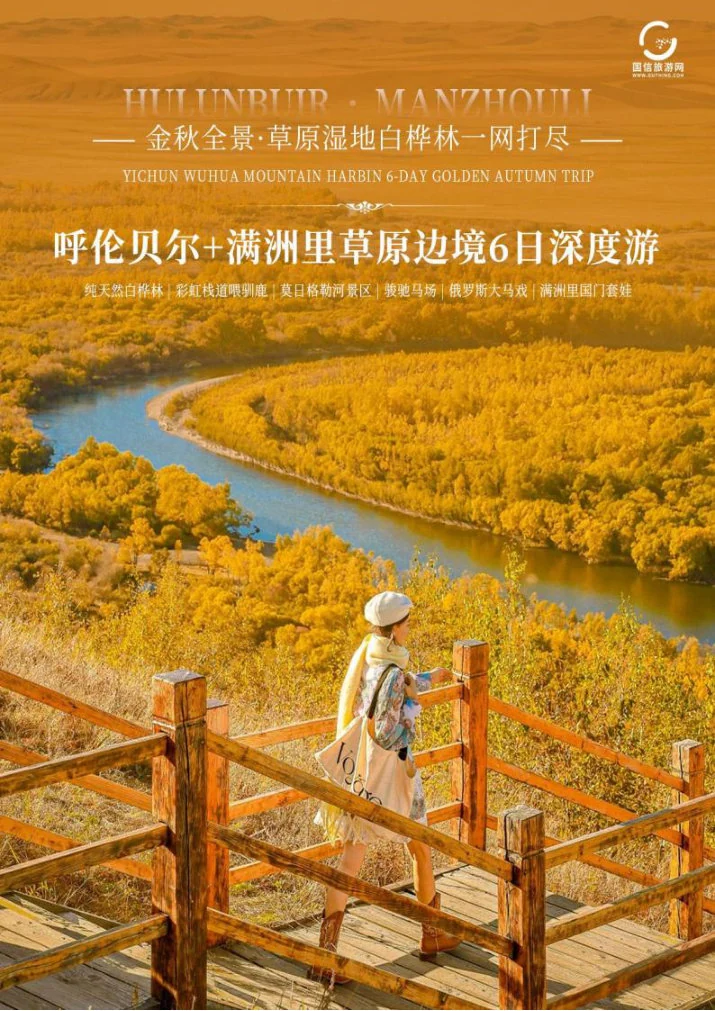
China through the seasons
A different perspective with every season.
Explore collectionA different kind of journey
China, made closer.
We design immersive, responsible travel experiences that bring you closer to the stories, traditions and landscapes that make China extraordinary.
For curious travellers and travel trade partners seeking something deeper, every route starts as a flexible idea—not a fixed package.
Our approach
Why travel with us
Closer to China. Closer to you.
Put local perspective first.
Explore beyond the headline sights, from neighbourhood markets and regional kitchens to quiet lanes and landscapes shaped by everyday life. Choose the places that interest you and let those details give the journey its character.
Design around the traveller.
Our sample itineraries are a starting point for your own trip. Share your interests, who you are travelling with and the pace you enjoy, so the route can bring together the experiences that matter to you.
One coherent journey.
A memorable trip needs more than a list of stops. Connect cities, countryside and cultural experiences in a sensible order, with time for the journeys between them and a clear understanding of what is included.
Travel at your rhythm.
Leave room to linger over lunch, walk a little further or enjoy a quiet morning. Balance discovery with downtime, and discuss travel distances and daily activity levels before confirming your plans.
A little closer
Postcards from China
Choose a place. Discover its story.



Choose a place
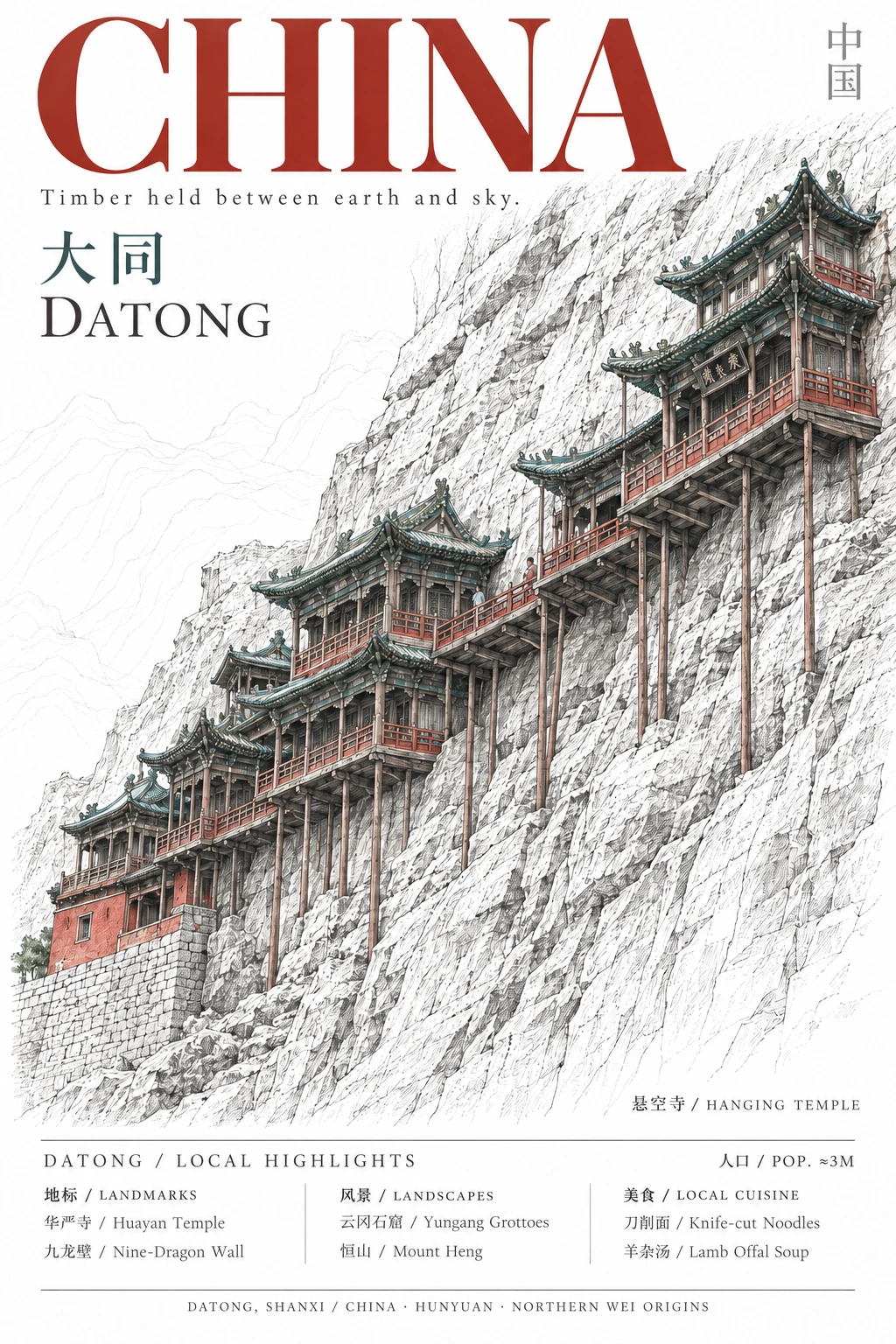
Postcard from Datong · Shanxi
The Hanging Temple 悬空寺
Timber held between earth and sky.
Pinned to a sheer cliff in Jinlong Gorge beneath Mount Heng, the Hanging Temple has hovered above the valley since the Northern Wei dynasty, around 1,500 years ago. Oak beams sunk deep into the rock carry some 40 small halls and pavilions, linked by narrow plank walkways. Unusually, it honours Buddhism, Taoism and Confucianism side by side, in a single hall shared by all three teachings.
- Founded
- c. 491 AD
- Halls
- About 40
- Setting
- Hunyuan, ≈65 km away
- Population
- ≈3 million
Landmarks
- Huayan Temple Liao and Jin-era halls in the old city.
- Nine-Dragon Wall China’s largest glazed-tile dragon screen.
Landscapes
- Yungang Grottoes UNESCO cave temples with some 51,000 statues.
- Mount Heng The Taoist “Northern Peak” above the temple.
Local cuisine
- Knife-cut noodles Dough shaved straight into the pot.
- Lamb offal soup A peppery breakfast staple.
Good to know Arrive early: the cliffside walkways are narrow and fill quickly.
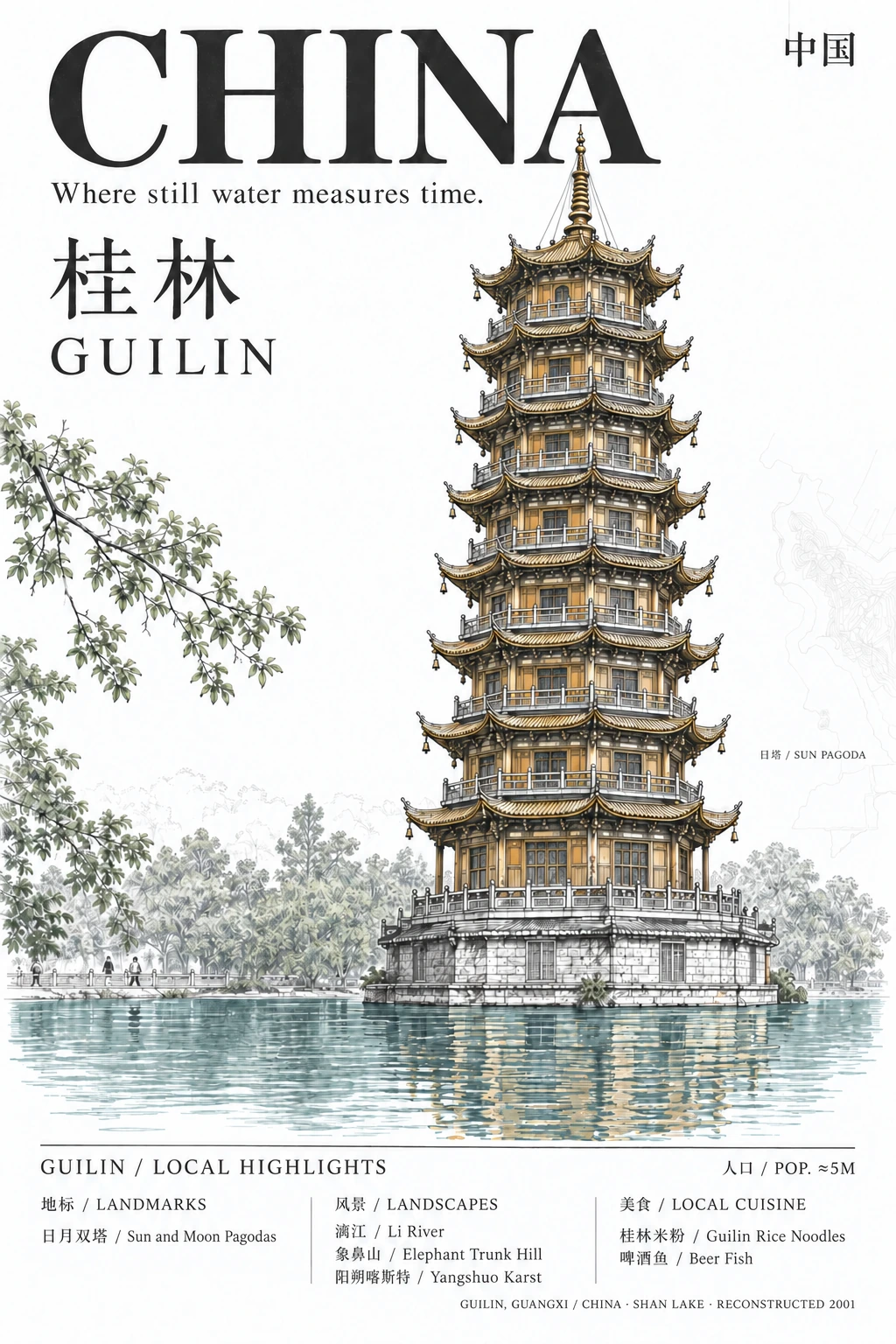
Postcard from Guilin · Guangxi
Sun & Moon Pagodas 日月双塔
Where still water measures time.
Rising from Shan Lake in the centre of Guilin, the twin pagodas were rebuilt in 2001 on the site of pagodas that stood in the city’s Tang-dynasty moat. The nine-storey Sun Pagoda is clad in bronze, its seven-storey partner in glazed tile, and a tunnel beneath the lake links the two. After dark both are lit, and their reflections settle on the still water.
- Sun Pagoda
- 41 m · 9 storeys
- Moon Pagoda
- 35 m · 7 storeys
- Rebuilt
- 2001
- Population
- ≈5 million
Landmarks
- Sun and Moon Pagodas Ride up the Sun Pagoda for lake views.
Landscapes
- Li River Cruise the karst stretch to Yangshuo.
- Elephant Trunk Hill An arch like an elephant drinking.
- Yangshuo karst Cycle lanes between rice fields and peaks.
Local cuisine
- Guilin rice noodles Silky noodles with braised meat and pickles.
- Beer fish River fish braised with local beer.
Good to know Walk the lakeside loop at dusk, when both pagodas light up.
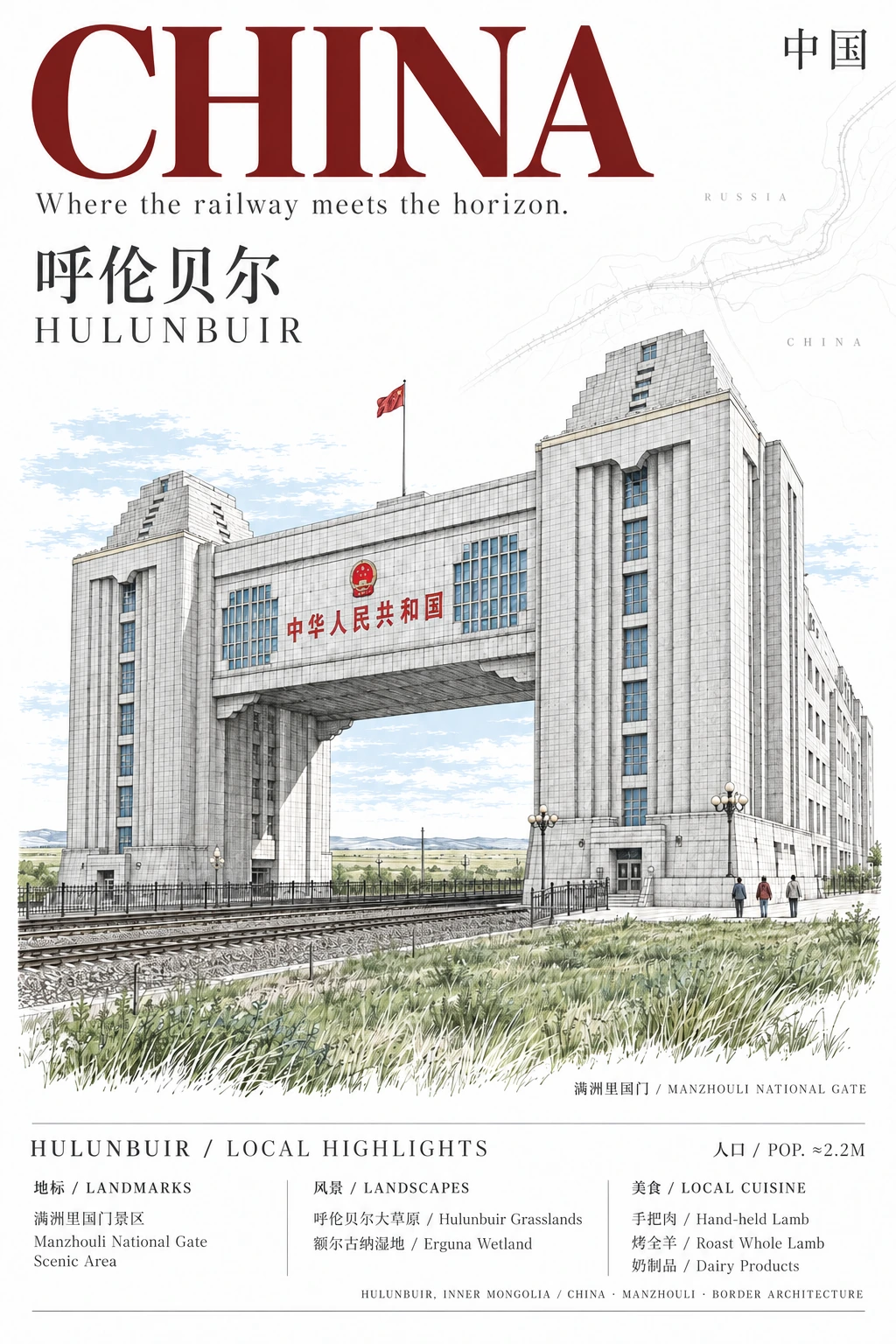
Postcard from Hulunbuir · Inner Mongolia
Manzhouli National Gate 满洲里国门
Where the railway meets the horizon.
In Manzhouli, on China’s border with Russia, the National Gate frames the railway that has tied this frontier town to the wider world since the early 1900s. The present gate was completed in 2008, the latest in a line of gates on this spot, and freight trains still roll beneath it on both broad and standard-gauge track. Beyond the town, the Hulunbuir grasslands open out towards the horizon.
- Completed
- 2008
- Height
- 43.7 m
- Tracks
- 3 lines, 2 gauges
- Population
- ≈2.2 million
Landmarks
- National Gate Scenic Area Views across the border into Russia.
Landscapes
- Hulunbuir Grasslands Summer pasture, yurts and herds.
- Erguna Wetland Braided river channels near Erguna.
Local cuisine
- Hand-held lamb Lamb on the bone, eaten by hand.
- Roast whole lamb The centrepiece of a feast.
- Dairy Milk tea, dried curd and cream.
Good to know June to August is the green season; winters can fall below −30 °C.
Postcard from Shanghai
Wukang Mansion 武康大楼
A city written in brick and light.
Completed in 1924 as the Normandie Apartments, Wukang Mansion was designed by László Hudec, one of Shanghai’s most celebrated architects. Its wedge-shaped plan, often compared to New York’s Flatiron Building, cuts the corner where Wukang Road meets Middle Huaihai Road. Actors and filmmakers later made their homes here, and today it anchors one of the most walkable streets of the former French Concession.
- Completed
- 1924
- Architect
- László Hudec
- Storeys
- Eight
- Population
- ≈24.9 million
Landmarks
- Oriental Pearl Tower The 468 m icon of Lujiazui.
- Shanghai Tower China’s tallest building, 632 m.
Landscapes
- Huangpu River Ferries and evening cruises.
- The Bund Historic facades facing Pudong.
Local cuisine
- Soup dumplings Xiaolongbao, full of hot broth.
- Pan-fried buns Shengjian, crisp-bottomed.
- Braised pork Hongshao rou, glossy and sweet.
Good to know Walk Wukang Road on a weekday morning, before the photographers arrive.
Postcard from Xi’an · Shaanxi
The Bell Tower 西安钟楼
The old capital keeps its rhythm.
Built in 1384, early in the Ming dynasty, and moved to its present site in 1582, the Bell Tower stands where Xi’an’s four main streets meet. A timber tower rises from a brick base to about 36 metres, and a replica of the Tang-dynasty Jingyun Bell hangs below. With the Drum Tower nearby, it once kept time for the walled city.
- Built
- 1384
- Moved
- 1582
- Height
- ≈36 m
- Population
- ≈12 million
Landmarks
- Xi’an City Wall Ming ramparts, nearly 14 km by bike.
- Giant Wild Goose Pagoda Tang pagoda built for Xuanzang’s scriptures.
Landscapes
- Mount Hua A great mountain of cliff paths.
- Qinling Mountains Forested range, home to wild pandas.
Local cuisine
- Roujiamo Braised meat in crisp flatbread.
- Mutton soup with bread Yangrou paomo, bread torn into broth.
- Liangpi Cold noodles with chilli oil.
Good to know Come at dusk, when the tower is lit; the Muslim Quarter is a short walk away.
Postcard from Xishuangbanna · Yunnan
Jinghong Golden Pagoda 大金塔
A quiet spire beneath the southern sun.
Jinghong’s Grand Golden Pagoda rises 66.6 metres over Gaozhuang Xishuangjing, a quarter built in the style of the Dai people beside the Lancang (Mekong) River. Its gilded spires and white tiers recall the Theravada Buddhist temples of Laos, Myanmar and Thailand. Each evening the night market below fills with lanterns, crafts and street food.
- Height
- 66.6 m
- Style
- Dai Theravada
- Setting
- Jinghong
- Population
- ≈1.3 million
Landmarks
- Gaozhuang Xishuangjing Dai-style lanes and a night market.
- Golden Pagoda Most striking at sunset.
Landscapes
- Tropical rainforest China’s richest forest for wildlife.
- Wild Elephant Valley Trails where wild elephants roam.
Local cuisine
- Dai-style BBQ Lemongrass fish over charcoal.
- Bamboo rice Sticky rice steamed inside bamboo.
- Pineapple rice Sticky rice baked in a pineapple.
Good to know November to April is dry season; mid-April brings the Water-Splashing Festival.
Postcard from Zhangjiajie · Hunan
Grand Canyon Glass Bridge 大峡谷玻璃桥
A fine line across the silence.
Opened in 2016, the Zhangjiajie Grand Canyon Glass Bridge spans 430 metres between two cliffs, roughly 300 metres above the canyon floor. Designed by architect Haim Dotan, its walkway is set with clear glass panels, so you cross with the forest falling away beneath your feet. It sits apart from the famous sandstone peaks, so plan a half day of its own.
- Opened
- 2016
- Length
- 430 m
- Height
- ≈300 m drop
- Population
- ≈1.5 million
Landmarks
- Tianmen Mountain Glass Skywalk A glass path on the cliffs, by cable car.
Landscapes
- Zhangjiajie National Forest Park China’s first national forest park, in UNESCO-listed Wulingyuan.
- Yuanjiajie sandstone peaks Stone pillars rising through mist.
Local cuisine
- Sanxiaguo hot pot Three meats in one pot, a Tujia favourite.
- Smoked pork Wood-smoked, stir-fried with chilli.
Good to know Daily visitor numbers are limited, so book ahead in holidays.
Postcard from Changsha · Hunan
Tianxin Pavilion 天心阁
Old walls, a city still unfolding.
Above a surviving stretch of Changsha’s old city wall, Tianxin Pavilion brings the city’s past into view. Its tiered roofs and red timber galleries recall the garden architecture of the Ming and Qing periods, while the surrounding streets belong to a lively provincial capital. Across the Xiangjiang River, Yuelu Mountain and its historic academy offer another perspective on Changsha: a landscape of wooded slopes, scholarship and long conversations.
- Setting
- Old city wall
- River
- Xiangjiang
- Province
- Hunan
- Population · 2024
- ≈10.62 million
Landmarks
- Tianxin Pavilion Historic pavilion above the old city walls.
- Yuelu Academy A centre of learning at the foot of Yuelu Mountain.
Landscapes
- Yuelu Mountain Wooded slopes on the western side of the city.
- Orange Isle A long island in the Xiangjiang River.
Local cuisine
- Stinky tofu A distinctive local street-food favourite.
- Sweet rice cakes Tangyou baba, glutinous-rice cakes in sweet syrup.
Good to know Pair the old city with a walk beside the Xiangjiang for two different views of Changsha.
Postcard from Wuhan · Hubei
Yellow Crane Tower 黄鹤楼
Poetry rises above the river.
On Snake Hill in Wuchang, Yellow Crane Tower looks out across the Yangtze River and the bridges that connect Wuhan. Its layered golden roofs have become a symbol of the city, and its long history of rebuilding is woven through Chinese poetry. The present tower carries that literary tradition into a modern river metropolis. Beyond the skyline, East Lake offers a quieter setting of water, wooded shores and open paths.
- Height
- 51.4 m
- Setting
- Snake Hill
- River
- Yangtze
- Population · 2024
- ≈13.81 million
Landmarks
- Yellow Crane Tower Golden eaves above Wuchang and the Yangtze.
Landscapes
- East Lake Lakeside paths and wooded shores.
- Yangtze River The broad waterway through the heart of Wuhan.
Local cuisine
- Hot dry noodles Reganmian, noodles dressed with sesame paste.
- Sanxian doupi A savoury breakfast of filled glutinous rice.
Good to know Leave time for both the riverfront and East Lake; they reveal very different sides of the city.
Postcard from Tianjin
The Tianjin Eye 天津之眼
A river turns the wheel of the city.
The Tianjin Eye rises above Yongle Bridge, turning the Haihe River into the centre of a sweeping city panorama. Its wheel reaches 120 metres above the ground, with the bridge and passing traffic beneath it. Along the water, Tianjin’s bridges and riverfront buildings tell a different story at every bend. Away from the river, the Five Avenues neighbourhood rewards a slower walk among streets of varied architectural styles.
- Height
- 120 m
- Diameter
- 110 m
- Setting
- Yongle Bridge
- Population · 2024
- ≈13.64 million
Landmarks
- Tianjin Eye A giant observation wheel above the bridge.
- Five Avenues Historic streets with varied architectural styles.
Landscapes
- Haihe River Bridges, waterfront walks and city reflections.
- Mount Panshan A mountain landscape in northern Tianjin.
Local cuisine
- Jianbing guozi A savoury breakfast crepe with a crisp filling.
- Fried dough twists Mahua, the city’s familiar twisted snack.
Good to know The riverbank gives you a view of the wheel itself; the ride offers a wider view of the city.
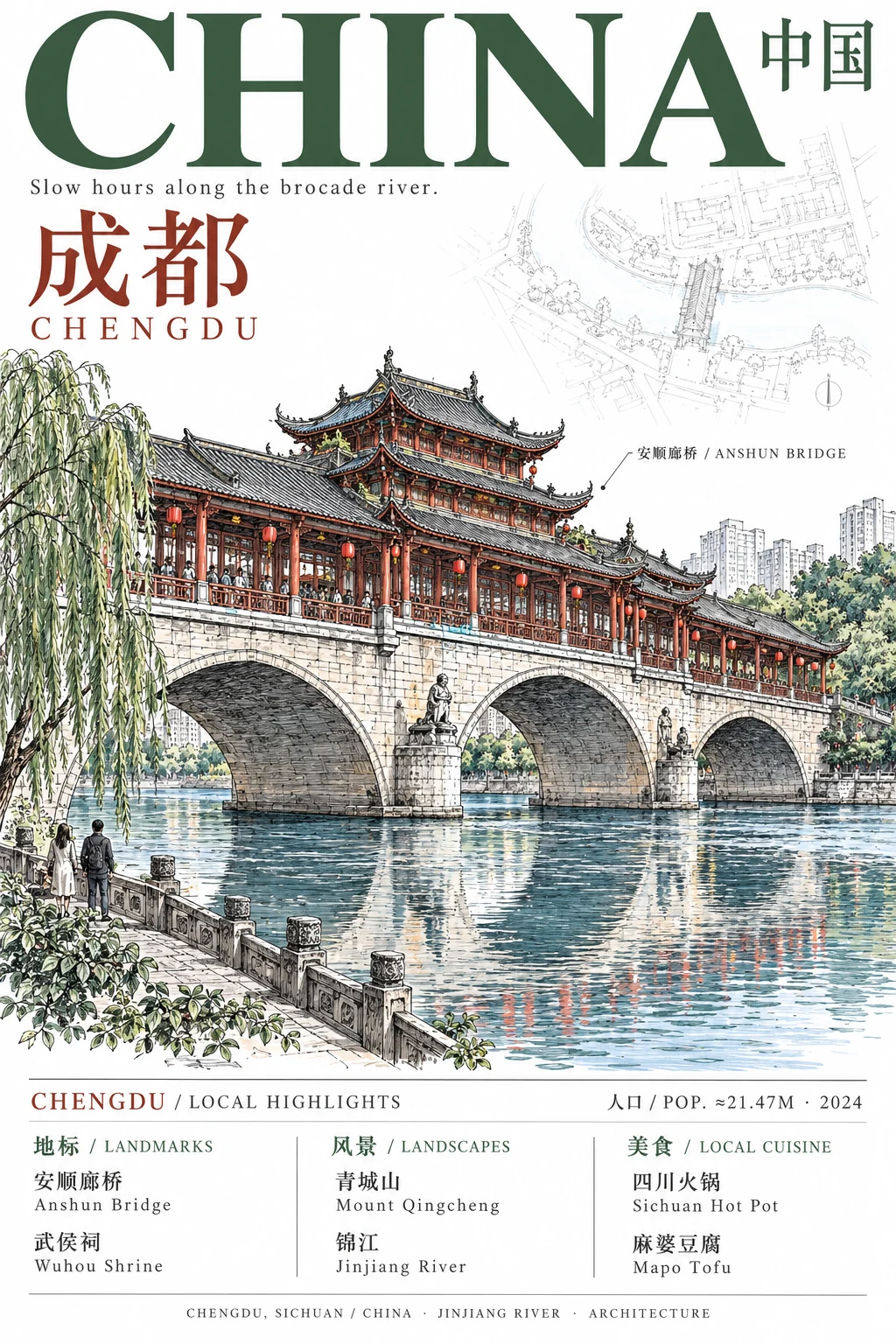
Postcard from Chengdu · Sichuan
Anshun Bridge 安顺廊桥
Slow hours along the brocade river.
With red walls, tiled roofs and upturned eaves, Anshun Bridge brings a covered gallery to Chengdu’s riverfront. The 81-metre bridge stands near the meeting of the Fu and Nan rivers, combining a pedestrian crossing with places to pause and look over the water. Its classical design sits within a thoroughly modern city. Elsewhere, Wuhou Shrine and the wooded slopes of Mount Qingcheng connect a Chengdu journey with history and landscape.
- Length
- 81 m
- Width
- 6 m
- Setting
- Jinjiang riverfront
- Population · 2024
- ≈21.47 million
Landmarks
- Anshun Bridge A covered bridge with red walls and tiled roofs.
- Wuhou Shrine A landmark associated with Three Kingdoms history.
Landscapes
- Mount Qingcheng Forested slopes with a long Taoist heritage.
- Jinjiang River An urban waterway for a slower riverside walk.
Local cuisine
- Sichuan hot pot A shared table of bubbling broth and dipping sauces.
- Mapo tofu Tofu with the characteristic flavours of Sichuan.
Good to know Walk the riverfront around dusk to see the bridge in daylight and as the lights come on.
Postcard from Xiamen · Fujian
Bagua Building 八卦楼
An island keeps its quiet rhythm.
Bagua Building’s stepped octagonal roof and red dome rise above the lanes of Gulangyu, just off Xiamen. Construction began in 1907 and the dome was completed in 1930; its colonnades and classical details reflect the island’s layered architectural history. The building later became home to the Gulangyu Organ Museum, connecting its distinctive silhouette with the island’s musical life. Nearby lanes lead towards the shore and the views from Sunlight Rock.
- Begun
- 1907
- Dome completed
- 1930
- Setting
- Gulangyu Island
- Population · 2024
- ≈5.35 million
Landmarks
- Bagua Building A red-domed landmark with a musical story.
Landscapes
- Gulangyu Island Historic lanes, architecture and coastal views.
- Sunlight Rock A rocky lookout over the island and sea.
Local cuisine
- Shacha noodles Noodles in a savoury shacha broth.
- Oyster omelette A local favourite built around fresh oysters.
Good to know Wear comfortable shoes for Gulangyu’s lanes and steps, and leave room to wander between landmarks.
Datong · Hanging Temple
Before you go to China
From your first payment to your next great meal, get to know the everyday side of China.
Eight short films to help you arrive prepared — and travel with curiosity.
THE CHINA TRAVEL SERIES 01 / 08
Get Your Phone Ready
Set up your internet access, choose a SIM or eSIM, and get translation tools ready before you fly. A little preparation helps you stay connected and find your way from the moment you arrive.
Watch the video introductionTHE CHINA TRAVEL SERIES 02 / 08
Payments and Apps
Get familiar with everyday payments in China, from Alipay and WeChat to useful travel apps. Prepare your accounts, understand QR codes, and keep a backup payment option for a smoother trip.
Watch the video introductionTHE CHINA TRAVEL SERIES 03 / 08
Trains, Taxis and Flights
Find your rhythm on the move. Learn what to expect at train stations, how to navigate taxis and local transport, and what to prepare for domestic flights across China.
Watch the video introductionTHE CHINA TRAVEL SERIES 04 / 08
Accommodation and Hosts
Choose a place that suits your journey and connect with your hosts before arrival. These practical tips cover bookings, arrival details and the small conversations that make checking in easier.
Watch the video introductionTHE CHINA TRAVEL SERIES 05 / 08
Attractions and Itineraries
Build a rewarding itinerary with room to enjoy it. Think ahead about attraction tickets, transport, busy holiday periods and changing seasons, then leave enough time to take each place in.
Watch the video introductionTHE CHINA TRAVEL SERIES 06 / 08
Food
Follow your curiosity through China’s regional flavours. Get comfortable with restaurant ordering, QR menus and food delivery, so you can spend more time discovering what you love to eat.
Watch the video introductionTHE CHINA TRAVEL SERIES 07 / 08
Everyday Details
Feel more at home in the little moments. Explore everyday customs, public spaces, temple visits and practical essentials that can make daily life on the road more comfortable.
Watch the video introductionTHE CHINA TRAVEL SERIES 08 / 08
Unexpected Discoveries
Look beyond the itinerary. Old streets, modern cities and unexpected encounters sit side by side in China. Prepare the practical details, stay curious, and leave a little space for the discoveries you did not plan.
Watch the video introductionThe ChinaVela field notes
A little insight. A richer journey.
Practical starting points for your travels, from the first idea to the everyday details.
For the curious traveller

Choose your starting point
Make a short list of the experiences you most want: imperial history, river scenery, regional food or time in nature. Choose one as your anchor, then build around it. Beijing, Xi’an and Guilin are starting points in our current collection, each offering a different focus.
Leave room between the highlights
Count arrival and departure days separately from full sightseeing days. A transfer is part of the trip too: allow room for packing, reaching the station or airport, and settling into your next stay. A shorter wish list can leave more time for the places you choose.
Turn an idea into a plan
Share your approximate dates, group size, interests and preferred pace. Use the sample journeys as a starting point, then discuss how they fit together before confirming travel arrangements.
Explore China classicsPlan around your full days
Write down the days you can actually spend exploring, then add travel time between places. Avoid treating every arrival day as a full sightseeing day. Pick a few priorities and leave the rest flexible.
Match the route to your group
Discuss walking distances, stairs, early starts and downtime with everyone travelling. A mountain itinerary and a city stay can feel very different even when they have the same number of days. Ask about the daily activity level before choosing.
Keep an unplanned moment
Leave a morning, an afternoon or a meal open where the schedule allows. Our four-day Li River journey and five-day Lijiang and Dali journey offer different starting points for a landscape-focused trip; ask us to help shape the pace around you.
Explore nature journeysBegin with a region
A food-led journey works best when there is time to notice the place around each meal. Our Lingnan flavours and heritage route is one starting point for combining regional food with cultural visits.
Share what you enjoy
Tell us whether you are drawn to markets, tea, small restaurants or more leisurely meals. Mention dietary requirements, allergies and ingredients you avoid when enquiring, so the team can discuss what can be arranged with local providers.
Make space at the table
Keep some room in the day around a food experience. Ask which meals and activities are included in the itinerary and which are optional, then choose a balance of planned experiences and time to explore.
Explore Taste of ChinaStart a conversation
A rough idea is enough.
Tell us the shape of your trip. Nothing is confirmed until the details feel right to you.
Hear from our travellers
Illustrative reviews with fictional names and dates, shown as layout examples.
A journey at our own pace
The itinerary gave us time to enjoy each place without feeling rushed. We could explore the main sights and still leave room for a quiet walk or an unexpected stop.
Sophie Bennett
The everyday moments stayed with us
Some of our favourite memories came from the smaller experiences: a neighbourhood market, a local meal and a conversation along the way.
James Wilson
A thoughtful mix of places
We enjoyed the balance between lively cities and quieter landscapes. Each stop brought a different perspective, and the route felt connected from beginning to end.
Amelia Chen
A taste of regional China
Discovering different regional flavours was a highlight. The food experiences helped us understand the places we were visiting in a more personal way.
Lucas Martin
Room to follow our interests
We appreciated being able to shape the journey around what interested us most. There was a good balance of shared experiences and time to explore independently.
Grace Taylor
More than the famous sights
The journey brought together well-known landmarks and less familiar corners. It was the combination of scenery, culture and everyday life that made it memorable.
Oliver Lee
Plan your trip
All China city guides · Explore China journeys · Before you go to China