ChinaVela city file
Changchun,
in context.
A northern city of film, engines and winter light.
Planning a visit to Changchun
Planning notes checked 16 October 2026. Day plans are suggestions; check current entry and transport arrangements for your dates.
Allow two days for Changchun if twentieth-century history interests you and you also want a film-themed visit or a park day. With only one day, choose the palace museum and a shorter city outing.
A history day and a choice of a second theme
- Day 1: Visit the Museum of the Imperial Palace of Manchukuo, then keep the afternoon for a short city walk or time to rest.
- Day 2: Choose a film-history visit or Jingyuetan for an outdoor day. Check the selected venue and conditions before making this a fixed part of the trip.
Understand which palace you are visiting
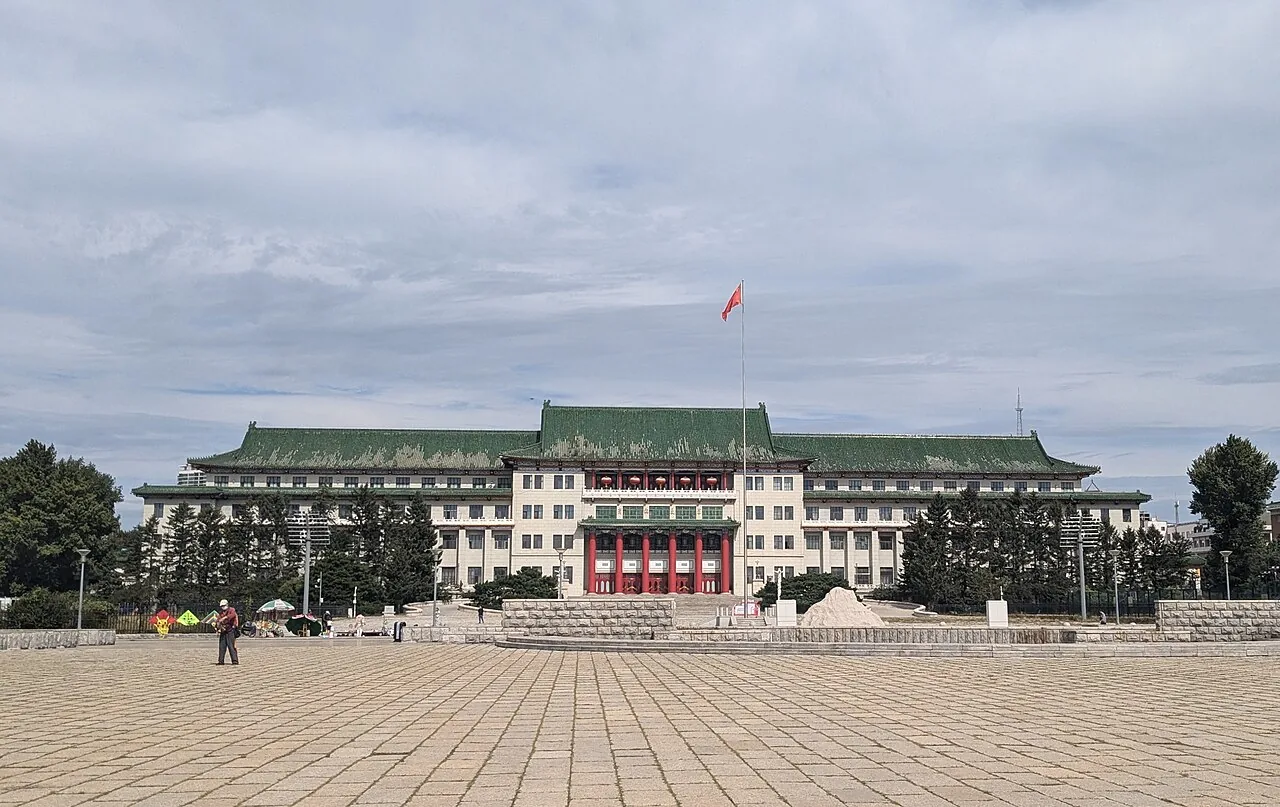
Jilin’s official introduction to the Museum of the Imperial Palace of Manchukuo identifies the Changchun museum. This visit concerns the Japanese-backed Manchukuo period; it is distinct from the earlier Qing Imperial Palace in Shenyang.
Check the museum’s own current opening and ticket notices for your date. Keep the booked document and any reservation confirmation with you. Allow time for the historical displays to understand the period as well as the buildings; families can choose a shorter route through the galleries.
Compare a central base with the outdoor transfer
For city visits, compare accommodation around Renmin Square or another convenient metro stop. For Jingyuetan, check the round trip from your hotel and choose an entrance and walking route before leaving. A large park needs a more specific plan than its map pin.
Changchun and Changchun West are different railway stations. Match the station on your ticket to your transfer. For winter travel, plan shorter outdoor periods with somewhere to warm up, and check what the chosen attraction is operating that day.
Use Changchun as a stop with its own purpose
Compare Shenyang’s Qing palace with Changchun’s twentieth-century history, then read the Harbin guide if you want an ice-season visit. Our seven-day Northeast China sample visits Shenyang, Changbai Mountain, Yanji and Harbin. It does not include Changchun; adding the two-day stay above needs extra nights and a revised transfer sequence. The preparation guides cover travel arrangements.
01 / History
A planned city with a difficult twentieth century.
Changchun expanded rapidly with the railway at the turn of the twentieth century, becoming a key hub on the routes that connected northeast China, Russia and the wider region. Its wide avenues and administrative buildings were not accidental: they were designed for a new kind of modern city.
From 1932 to 1945, the city was the capital of the Japanese-controlled state of Manchukuo. That period left a substantial architectural record and a painful historical legacy. A thoughtful visit gives both facts their place: buildings can be admired as urban form while the political violence and coercion behind the project are not softened or ignored.
After 1949, Changchun became a centre of state-led industrialisation, especially automobiles and film. Today the city’s story is best read as a sequence of transformations rather than a single heritage narrative.


02 / Culture
A screen city with a working rhythm.
Changchun Film Studio helped define the visual language of post-1949 Chinese cinema. Its importance is not only institutional: it gave generations of writers, actors, technicians and audiences a shared reference point, and it remains a useful way into the city’s creative life.
Culture here also sits beyond the studio gates. Automobile workers, university communities and winter street life give Changchun a practical civic character. Broad roads can feel monumental by day, then intimate when tram lights, small restaurants and snow bring the pace down at evening.
Pair the film district with a walk through a residential neighbourhood or a public park. The contrast between designed grandeur and ordinary routine is where the city becomes most interesting.
03 / Landscape
A geography that sets the pace.
South Lake, long winters and generous boulevards give Changchun a seasonal identity: snow changes the city’s colour, pace and social life.
Winter / rhythm
A city designed for the long season.
Winter is not a pause in Changchun; it is an organising principle. Snow, broad roads and low light make the city’s scale especially legible, while trams, hot food and warmly lit shops create a counter-rhythm at street level.
Pair South Lake or a boulevard walk with a small restaurant rather than rushing between formal sights. The atmosphere is the attraction.

04 / Food
Food built for winter—and for sharing.
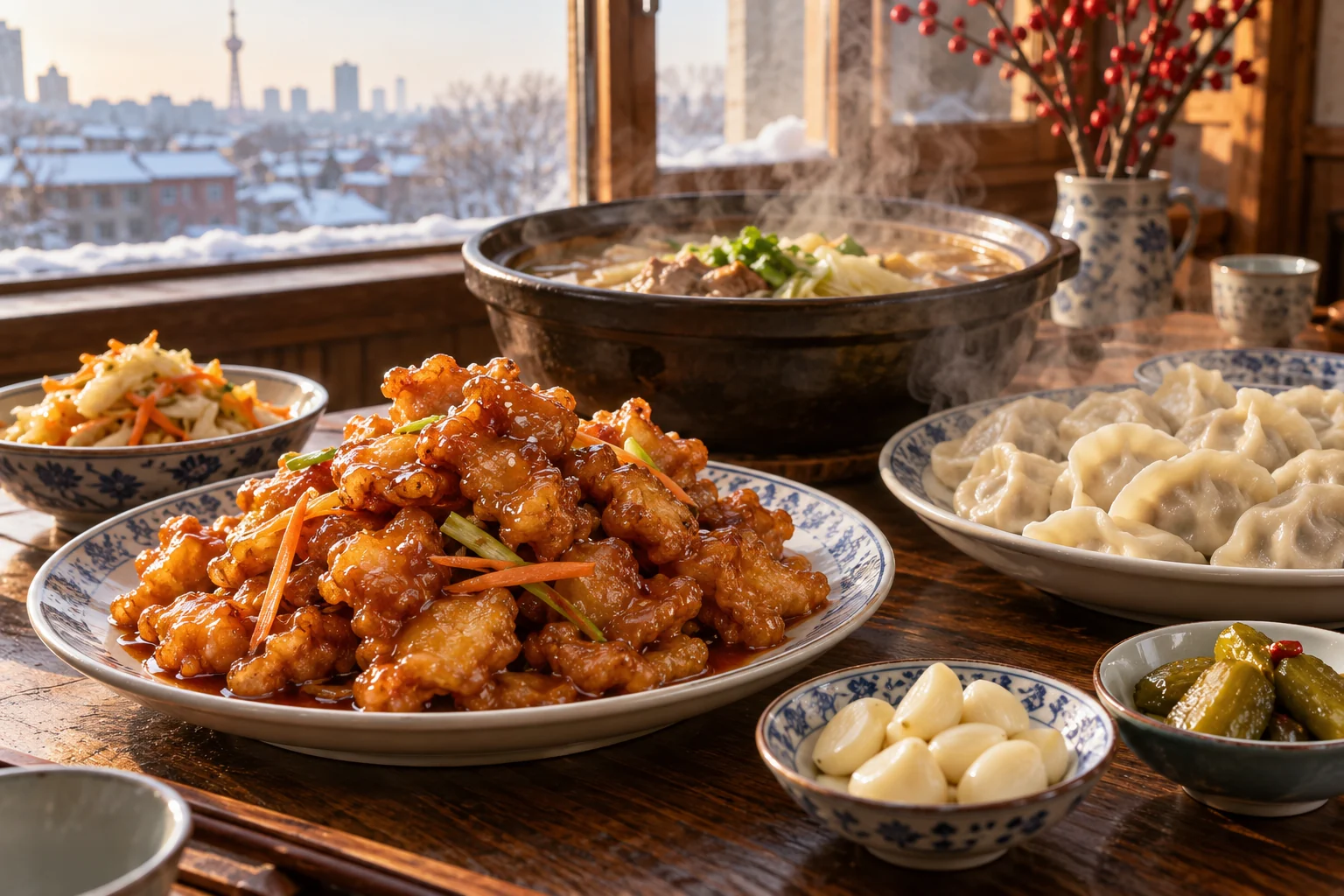
Changchun’s table is generous, practical and deeply social. Guobaorou—the crisp, sweet-sour pork dish associated with the northeast—balances texture and brightness; dumplings are made for gathering; slow stews keep the warmth in when the temperature drops.
Look beyond a single famous dish. A satisfying meal often moves from cold plates dressed with garlic and vinegar to a shared hot centre, with noodles or dumplings carrying the conversation. Residential restaurants and market-adjacent kitchens are usually more revealing than a polished showcase address.
The flavour profile is confident but not heavy for its own sake: pickles, starch, meat, broth and a clear sense of season make the cuisine feel designed for the long north.
05 / Changchun now
A manufacturing city learning new rhythms.
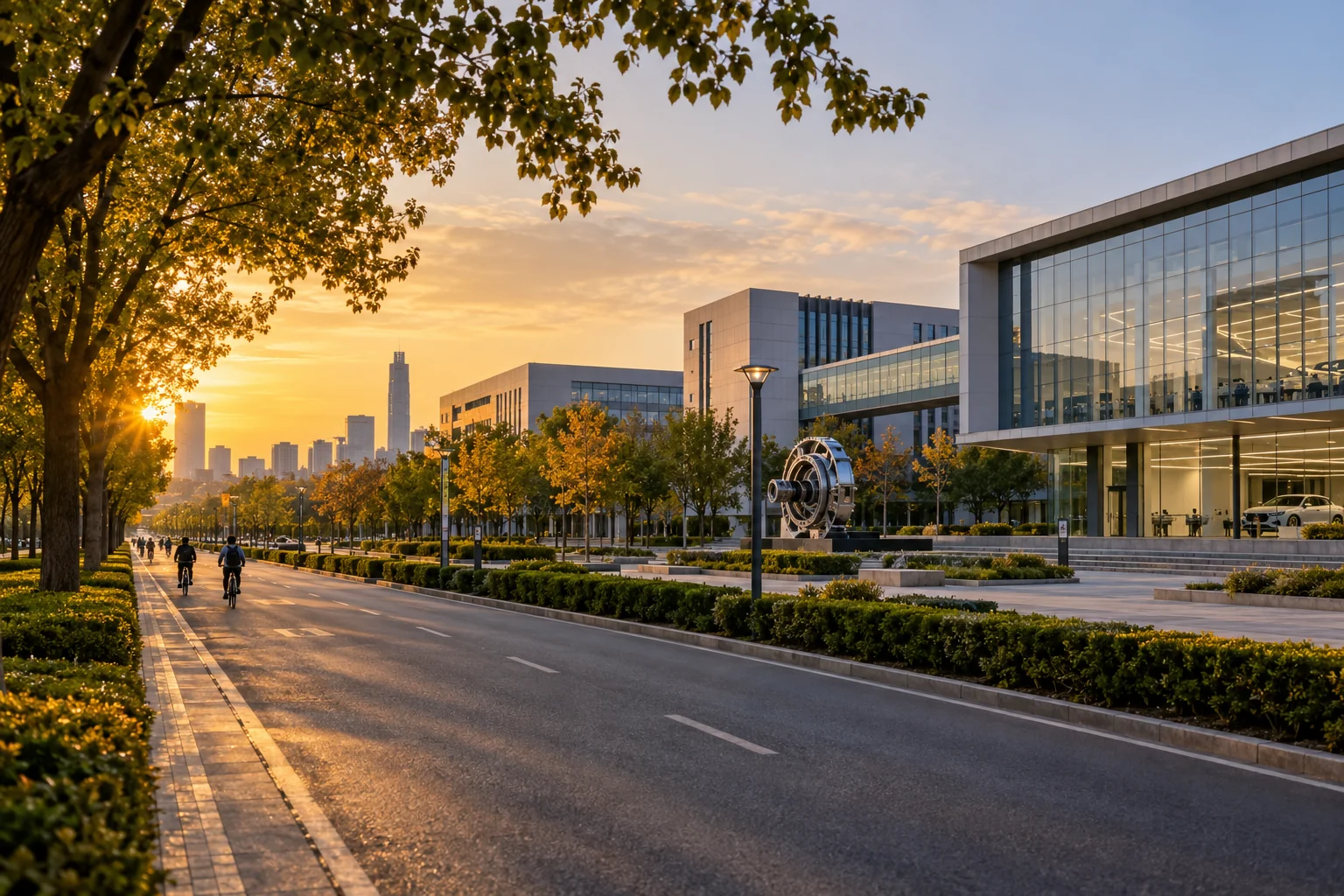
Changchun remains one of China’s defining automobile centres. Its industrial base is visible in research campuses, supplier networks and the technical universities that train the people who keep the sector moving. That legacy gives the city a practical confidence: it is built around skilled work, long production lines and the infrastructure that supports them.
Yet the contemporary city is not only factory-facing. Film, design, winter tourism and a younger café-and-gallery culture are finding room beside older industrial districts. The most interesting contrast is between the planned scale of the city and the smaller, warmer social worlds tucked into it.
For travellers, this means a visit can move from a museum or studio to a public park, a working neighbourhood and a simple dinner without feeling like separate itineraries. Changchun’s present is cumulative—new layers are added rather than pasted over the old ones.
06 / Local notes
Choose a way in.
Understand the palace visit
The Museum of the Imperial Palace of Manchukuo concerns the Japanese-backed state of 1932–1945. It is a different visit from the earlier Qing palace in Shenyang.
Choose the second day
Choose a film-history visit or a Jingyuetan outing for your second day. Check the venue or park entrance and the return journey before setting out.
Prepare for a winter stop
Plan shorter outdoor periods with indoor breaks in winter. Check the full station name on your ticket; Changchun and Changchun West are different stations.
07 / Watch
See Changchun in motion.
A visual companion for streets, weather and everyday pace.
Plan with ChinaVela
Let a city set the direction.
Tell us what calls to you—history, food, landscape or a mix—and we will shape the right encounter.
Talk to a travel specialistPlan your visit
Other city guides: Shenyang city guide · Dalian city guide.
All China city guides · Explore China journeys · Before you go to China