
Lake country & digital city
Hangzhou
A city of tea hills, pagodas and long waterside walks — where landscape has shaped urban life for centuries.
City overview
West Lake, Longjing tea and Liangzhu
Planning a visit to Hangzhou
Planning notes checked 16 October 2026. Day plans are suggestions; check current entry and transport arrangements for your dates.
Allow three full days for West Lake, a tea or temple day and a separate Liangzhu outing. With two days, keep West Lake and your preferred second area; adding every major sight would leave much of the visit to transfers.
Three days with one main area each day
- Day 1: Walk a selected part of West Lake, with one garden, temple or museum stop. You do not need to circle the entire lake.
- Day 2: Choose the Longjing tea area or Lingyin and its surroundings. Allow time to sit down and keep the walking route suited to your group.
- Day 3: Choose Liangzhu for an archaeology-focused outing, or keep a shorter city day if you have an onward train.
Choose which lake walk and which heritage site
UNESCO’s West Lake listing covers the lake and its surrounding cultural landscape. Use a specific starting point and finish, with a way back to your hotel. A long scenic walk can be shortened without losing the purpose of the day.
The Archaeological Ruins of Liangzhu City are a separate World Heritage property. Check the archaeological park and the museum as distinct venues, with their own access and booking instructions. Treat this as a dedicated outing with its own transfer from West Lake.
Decide between central convenience and a quieter base
For a first visit, compare accommodation near the east side of West Lake or a useful metro connection. A tea-village stay may suit a slower trip but changes the transfers for city meals and museum visits. Check the exact hotel approach and whether a car can reach the entrance.
Hangzhou and Hangzhou East are different railway stations; use the full ticketed name when booking transport. At a tea farm, ask what a visit includes and whether there is a tasting or purchasing expectation. Harvest activity depends on the season and cannot be assumed from a tea-themed itinerary.
Leave a travel block for the next city
Compare Shanghai for a larger city stay and Suzhou for gardens and canal neighbourhoods. Three full Hangzhou days are different from a three-day trip that includes arrival and departure. Read the preparation guides, or ask us to arrange the sequence around your trains and preferred walking pace.
01 / Place
The lake as a city’s inner room
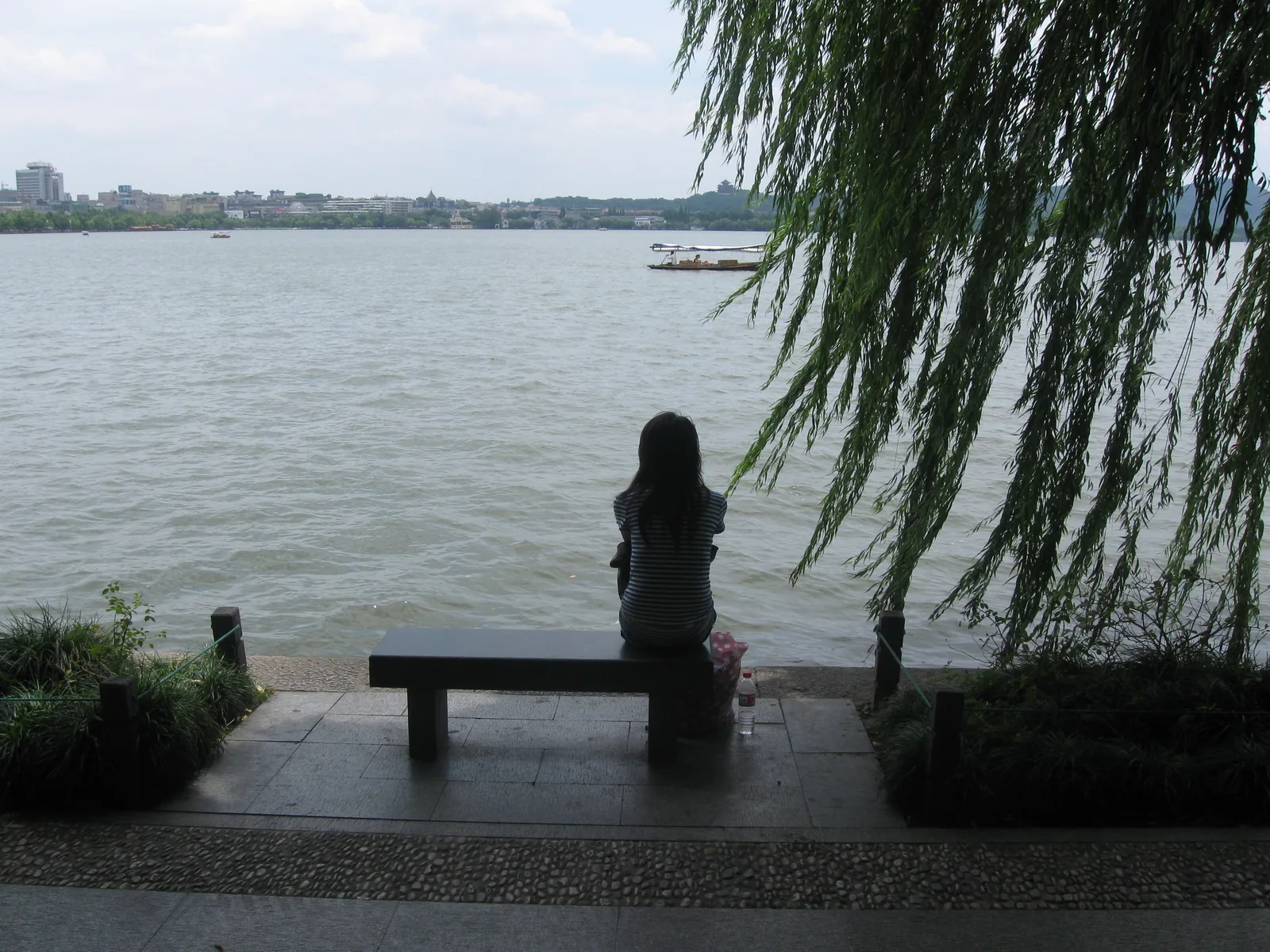
West Lake is not simply Hangzhou’s best-known view. Its causeways, willow edges, temples and distant hills have long given the city a shared public room — a place for walking, boating, conversation and weather watching.
The reward comes from returning at different times of day. A lake shore at dawn and a lakeside path after rain can feel like two different cities.
02 / Culture
Tea, craft and the art of patience
Hangzhou’s cultural language is often quiet: tea poured carefully, gardens framed for a particular view, a bridge placed to slow a walk. Longjing tea country on the city’s western edge makes this sensibility tangible, with low hills and small villages close enough to the urban core to feel part of the same rhythm.
That patience sits alongside a highly contemporary city known for technology and commerce. Hangzhou is compelling because it does not treat these identities as opposites; innovation, landscape and domestic ritual remain in active conversation.
03 / Living landscape
Water, hills and a changing city
Beyond the lake, Hangzhou opens into paths, tea slopes and canals. Its modern neighbourhoods and digital economy are real, but the city’s strongest gift is still a sense of proportion: water and hills remain present in everyday urban life.

Good to know
Walk the edges
Use the lake as a place to linger, not a checklist of viewpoints.
Taste with context
Ask what a Longjing visit includes, whether tasting has a charge and whether purchases are expected. Tea picking depends on the season.
Leave central streets
The western hills add depth to the city’s refined urban core.
A closer reading
Five lenses on Hangzhou.
History
The long view
Culture
Everyday culture
Landscape
Ground and horizon
Food
At the table
Now
A city in motion
Watch
See Hangzhou in motion.
A visual companion selected for its streets, people and everyday pace.
Plan with ChinaVela
Travel deeper, with the right local context.
Talk to a travel specialistPlan your visit
Other city guides: Shanghai city guide · Suzhou city guide.
All China city guides · Explore China journeys · Before you go to China