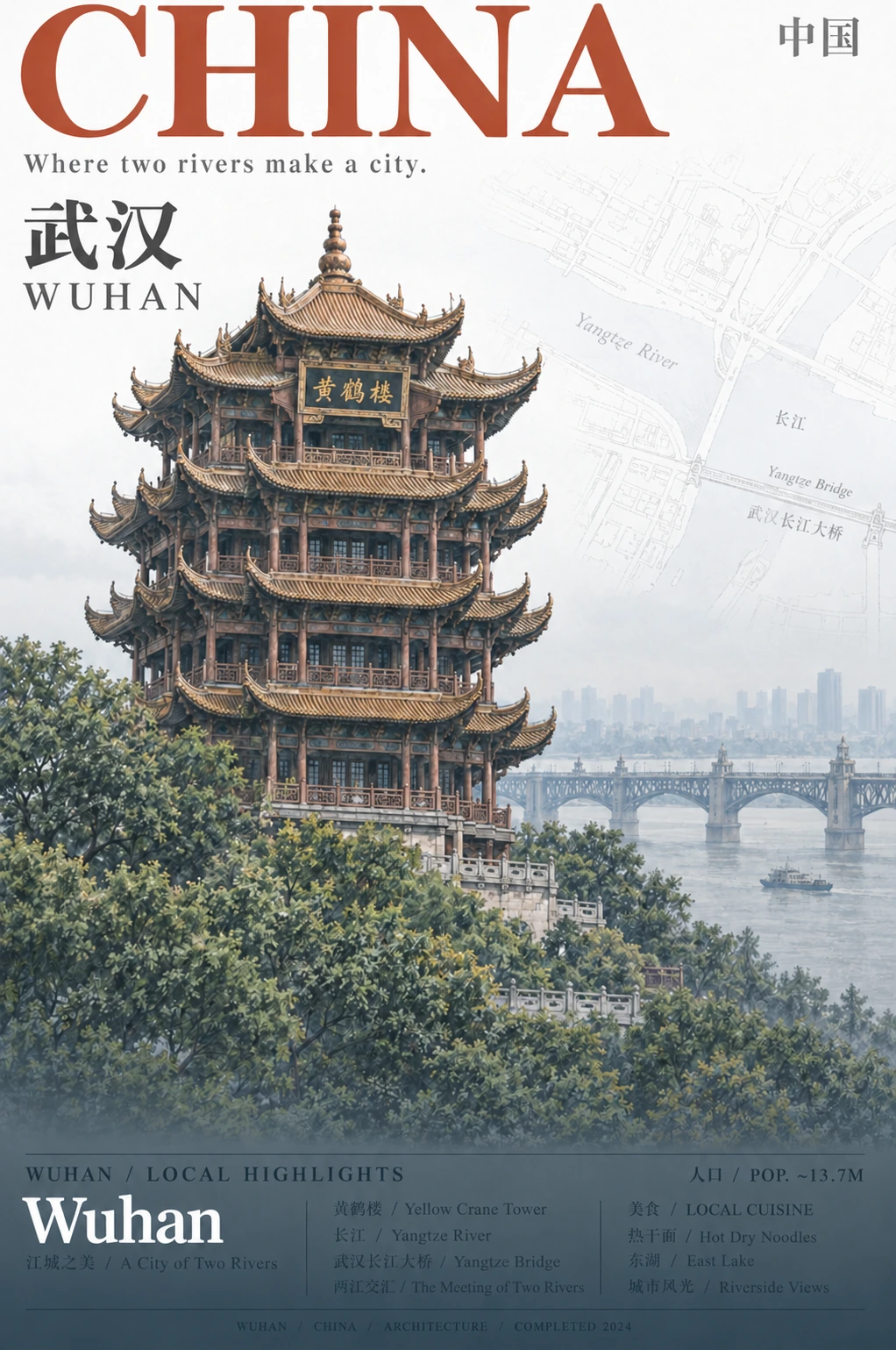
Where rivers meet · ChinaVela city guide
Wuhan
A three-town river city shaped by bridges, learning, appetite and the long pulse of the Yangtze.
At a glance
Wuchang, Hankou and Hanyang
Group Yellow Crane Tower, Hubei Provincial Museum and East Lake around your Wuchang days. Give Hankou’s streets and riverfront a separate outing to reduce repeated river crossings.
Planning a visit to Wuhan
Planning notes checked 16 October 2026. Day plans are suggestions; check current entry and transport arrangements for your dates.
Allow three full days for Wuhan if you want the tower, Hubei Provincial Museum, East Lake and time in Hankou. The rivers shape the route: grouping visits on the same side saves repeated crossings.
Three days grouped around the rivers
- Day 1: Stay on the Wuchang side for Yellow Crane Tower and a nearby street walk. Choose a shorter route if heat or steps would make the tower day tiring.
- Day 2: Visit Hubei Provincial Museum on your reserved date, then choose a manageable section of East Lake rather than a full circuit.
- Day 3: Give Hankou’s historic streets and riverfront their own outing. Leave room for breakfast and a meal instead of repeatedly crossing the river for individual sights.
Reserve Hubei Provincial Museum with the right document
The museum’s official service page describes real-name booking and entry for visitors using passports. Bring the original document used in the reservation and the booking confirmation or QR code required for that document. Check the current calendar before setting your museum day.
A temporary summer extension is not a year-round timetable. Confirm the opening and last-entry times for your date in the live notice, and check any separate booking for a performance or special exhibition. A general itinerary does not secure those extras.
Choose a base for the side you will use most
For the tower, museum and lake plan, compare Wuchang-area accommodation with a Hankou base if the street and riverfront day matters more. A hotel close to a metro connection can be more useful than a broad “city centre” label.
Wuhan, Hankou and Wuchang are distinct railway stations. Check the ticket before booking a transfer. Map the museum entrance and your chosen lake access point as separate stops; East Lake is too large for one vague meeting pin. Keep an indoor alternative for a wet or very hot afternoon.
Add the western Hubei leg deliberately
Yichang is the next guide to read for river, dam or Shennongjia plans. Our four-day Shennongjia sample starts in Yichang, so any Wuhan stay and transfer need to be arranged separately. Check the preparation guides before fixing the full route.
A city made by confluence
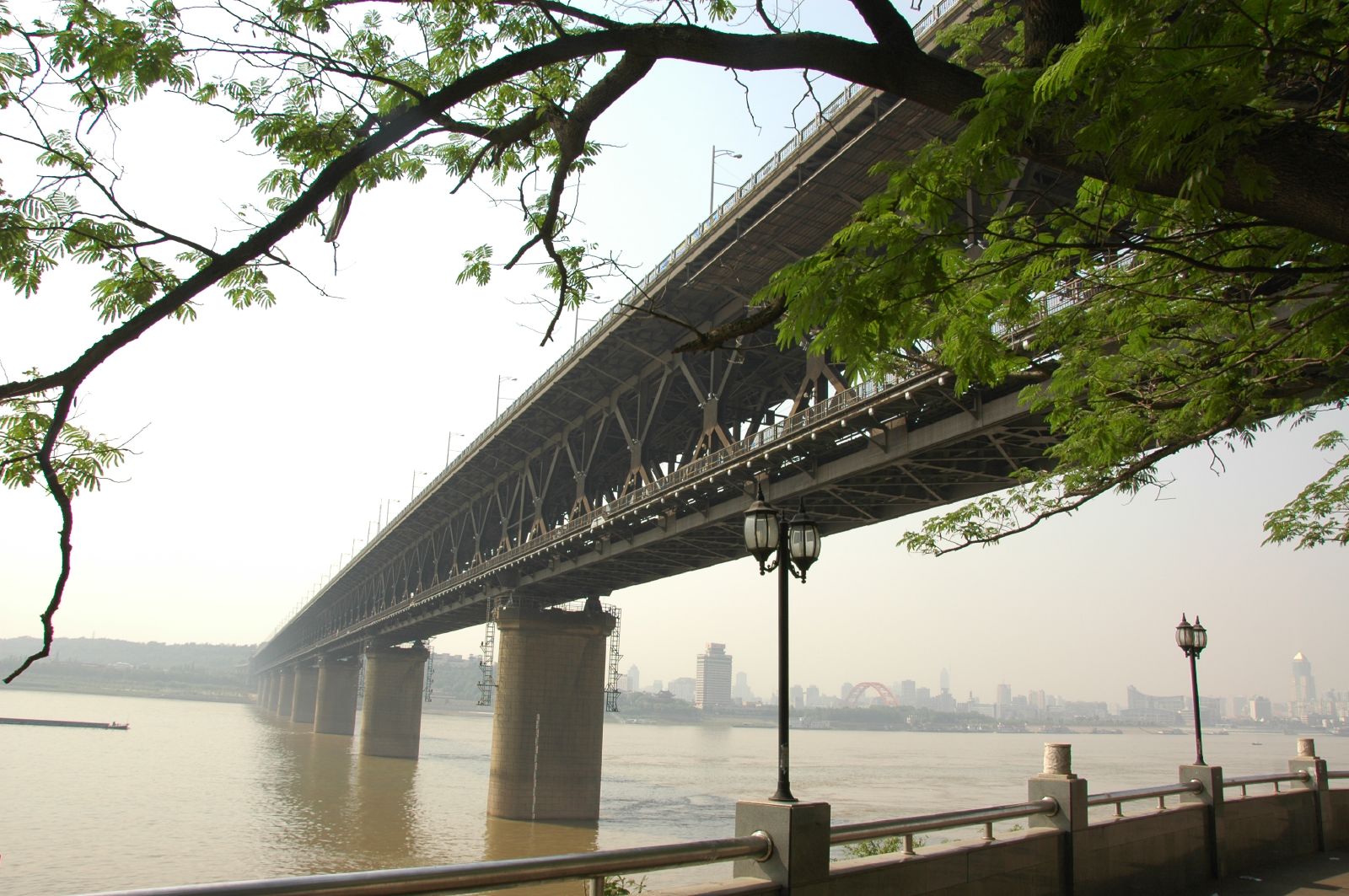
Wuhan sits at the meeting of the Yangtze and Han, a fact that explains its scale, commerce and visual rhythm. Wuchang, Hankou and Hanyang once had distinct identities; the city still feels like several centres in conversation, joined by bridges and broad riverbanks.
Start with the water. The old bridge and the view from Yellow Crane Tower turn the city from a map into a living cross-section of rail, river, hill and skyline.

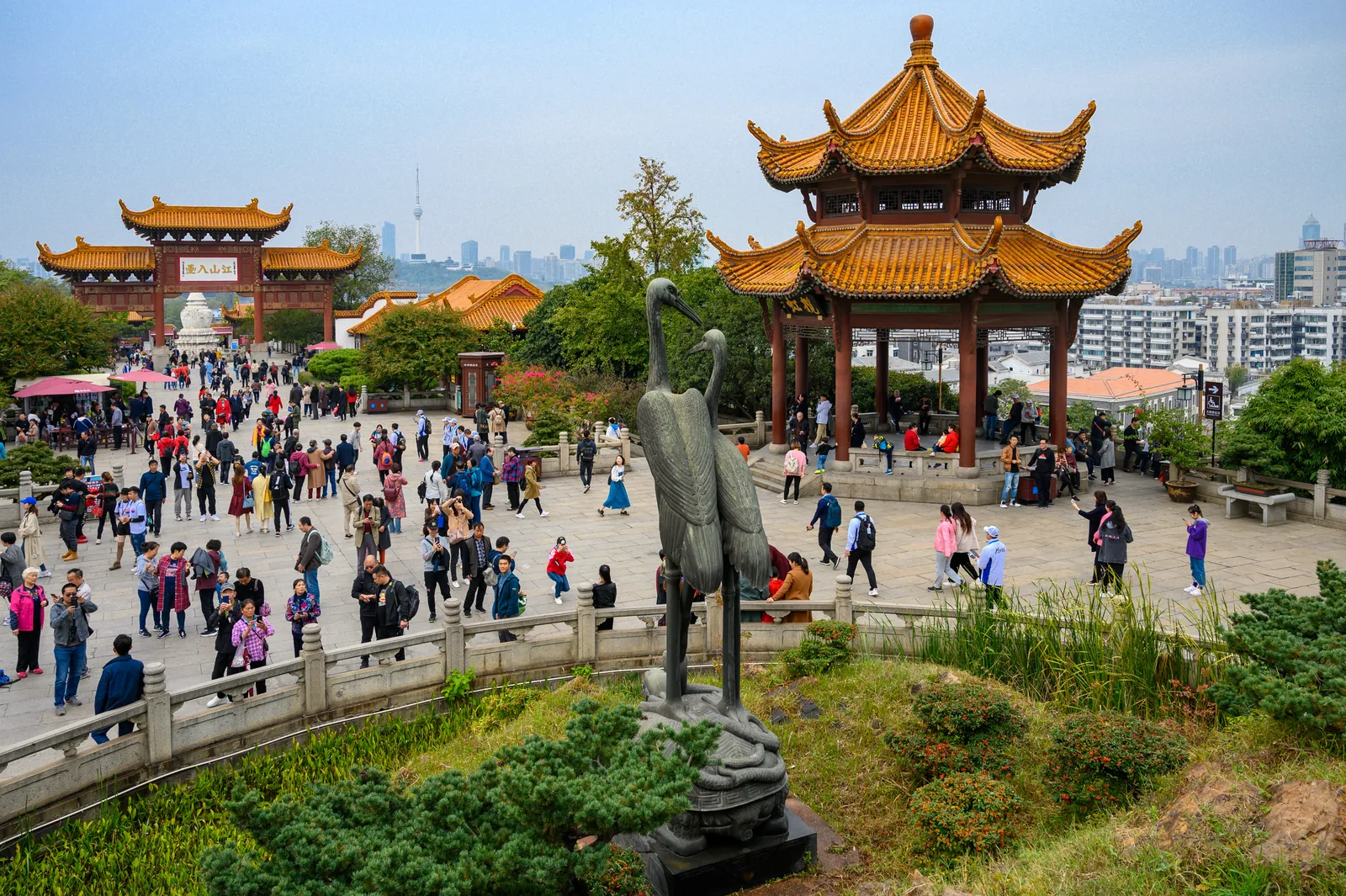
A tower, a campus, a table
Yellow Crane Tower belongs to the city’s literary imagination, but Wuhan’s cultural energy also comes from its universities, publishing, music and street-level sociability. Coffee shops and late-night food stalls sit comfortably beside formal cultural institutions.
Spend time where students and residents do: around campus districts, neighbourhood markets and the older fabric of Hankou. Wuhan becomes warmer and more particular the farther you move from its postcard view.
Lakes inside a metropolis
East Lake gives Wuhan a different visual register: long shorelines, wooded paths and seasonal blossoms inside a very large city. Along the Yangtze, evening walks reveal the scale of the river more clearly than any viewpoint can.
These water edges are not ornamental. They are where Wuhan slows down — for cyclists, families, anglers and people watching the city’s weather turn over the river.

Industry, research and everyday momentum
Historically a transport and industrial centre, Wuhan is also a major research and education hub. Its present-day character comes from that combination: factories and former concessions, laboratories and universities, practical commerce and a lively food culture.
Try hot dry noodles in the morning, then leave room for longer, slower meals later. The city’s energy is less polished than some coastal centres — and that unfiltered quality is part of the draw.
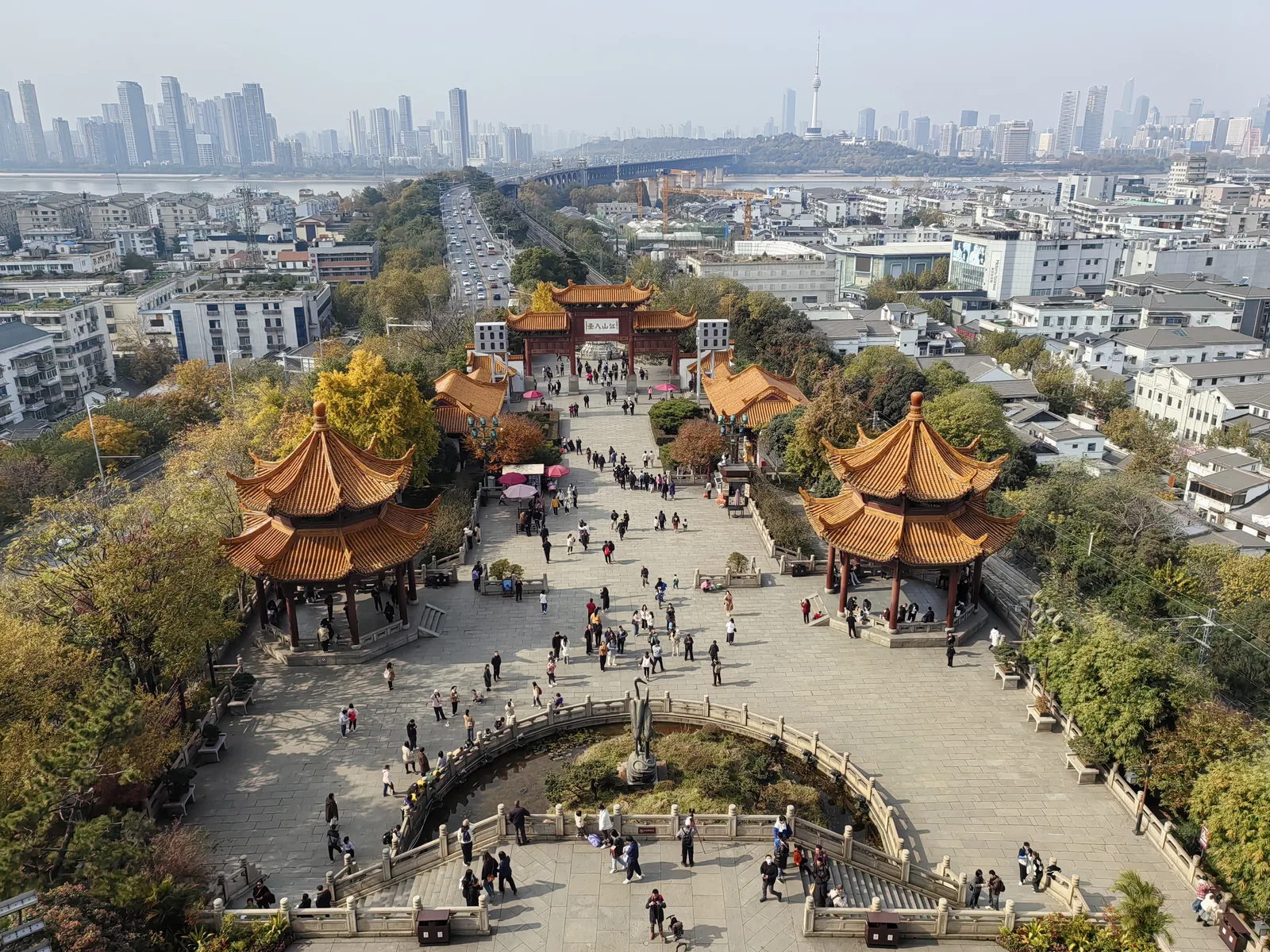
Image dossier
Details that hold the story.
These photographs are placed as evidence, not decoration — a closer look at the settings that make Wuhan distinct.


Good to know
Make the city feel like a place, not a checklist.
Use a bridge crossing or ferry ride to understand how the three historic districts relate.
Hot dry noodles are a ritual rather than merely a dish; go early and follow the local queue.
The network handles distance; the riverside and old commercial streets are best explored on foot.
Wuhan’s riverfront changes character after dark, when bridges and towers become part of the city’s nightscape.
Watch
Watch: Wuhan and Yellow Crane Tower
A film companion for seeing the streets, weather and everyday pace that words cannot fully carry.
Plan with ChinaVela
Travel deeper, with the right local context.
Tell ChinaVela what interests you — culture, food, education, landscapes or a mix — and we will shape the right encounter.
Talk to a travel specialistPlan your visit
Other city guides: Yichang city guide · Changsha city guide.
All China city guides · Explore China journeys · Before you go to China