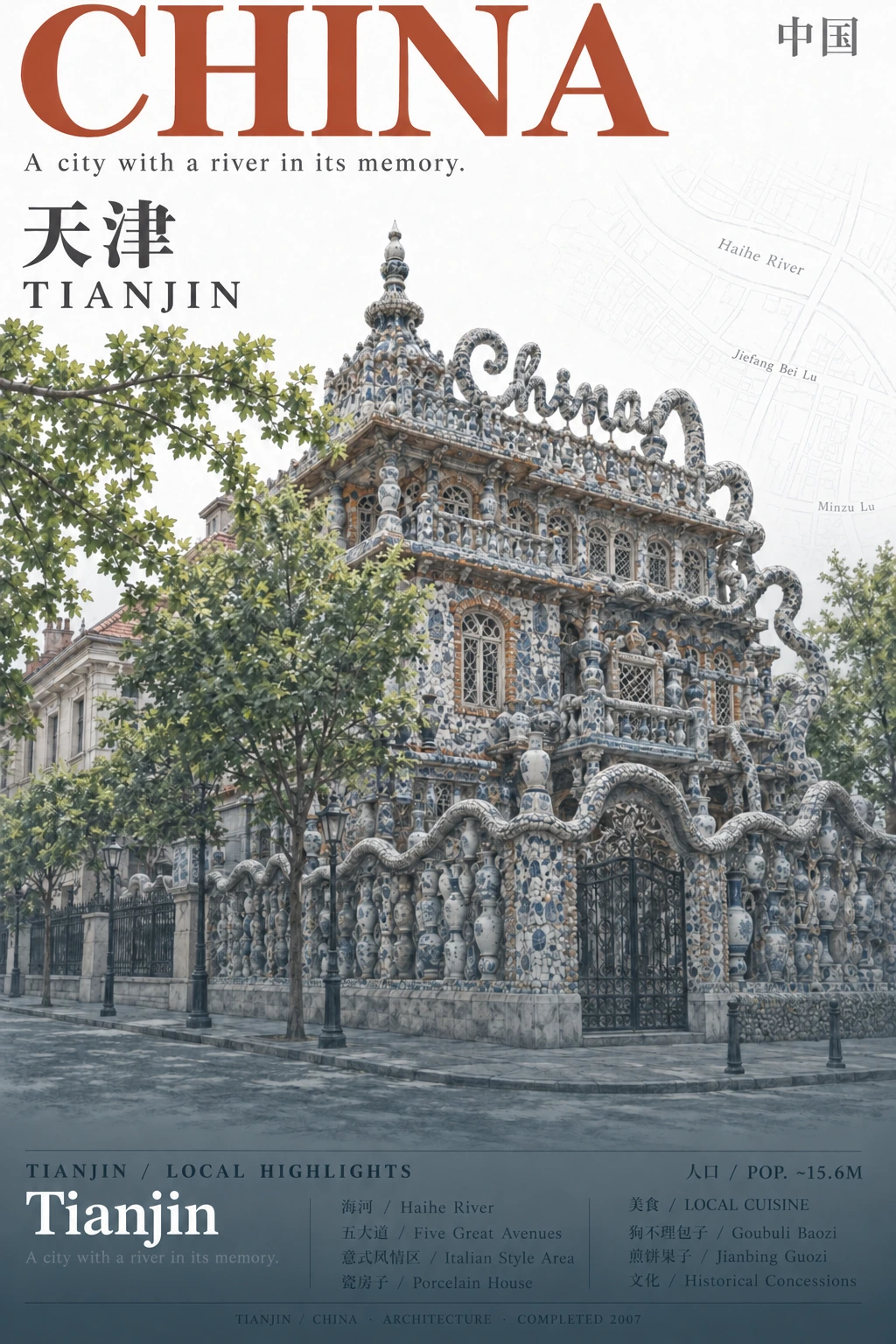
River port & civic character
Tianjin
A northern port city where former concessions, market culture and an understated sense of humour make a distinctive urban mix.
City overview
The Five Great Avenues and Hai River
01 / Place
A city of borrowed and remade streets
Tianjin’s former concession districts are often described through architecture, but their deeper interest lies in what followed: residences, schools, shops and everyday life adapted a complex foreign-built fabric into a northern Chinese city.
The Five Great Avenues reward a slow walk. Look at proportion, shade and the way residential streets hold stories more quietly than grand landmarks.

02 / Culture
A port with a practical soul
The Hai River links Tianjin’s formal civic landscape with its trading history. The city’s food culture — direct, flour-based, happily snackable — reflects the same practical generosity. Tianjin is less performative than Beijing and less polished than Shanghai; that is part of its charm.
Street markets, old bookshops, bathhouse culture and comic dialogue traditions give it a voice that feels distinctly local.
03 / Living landscape
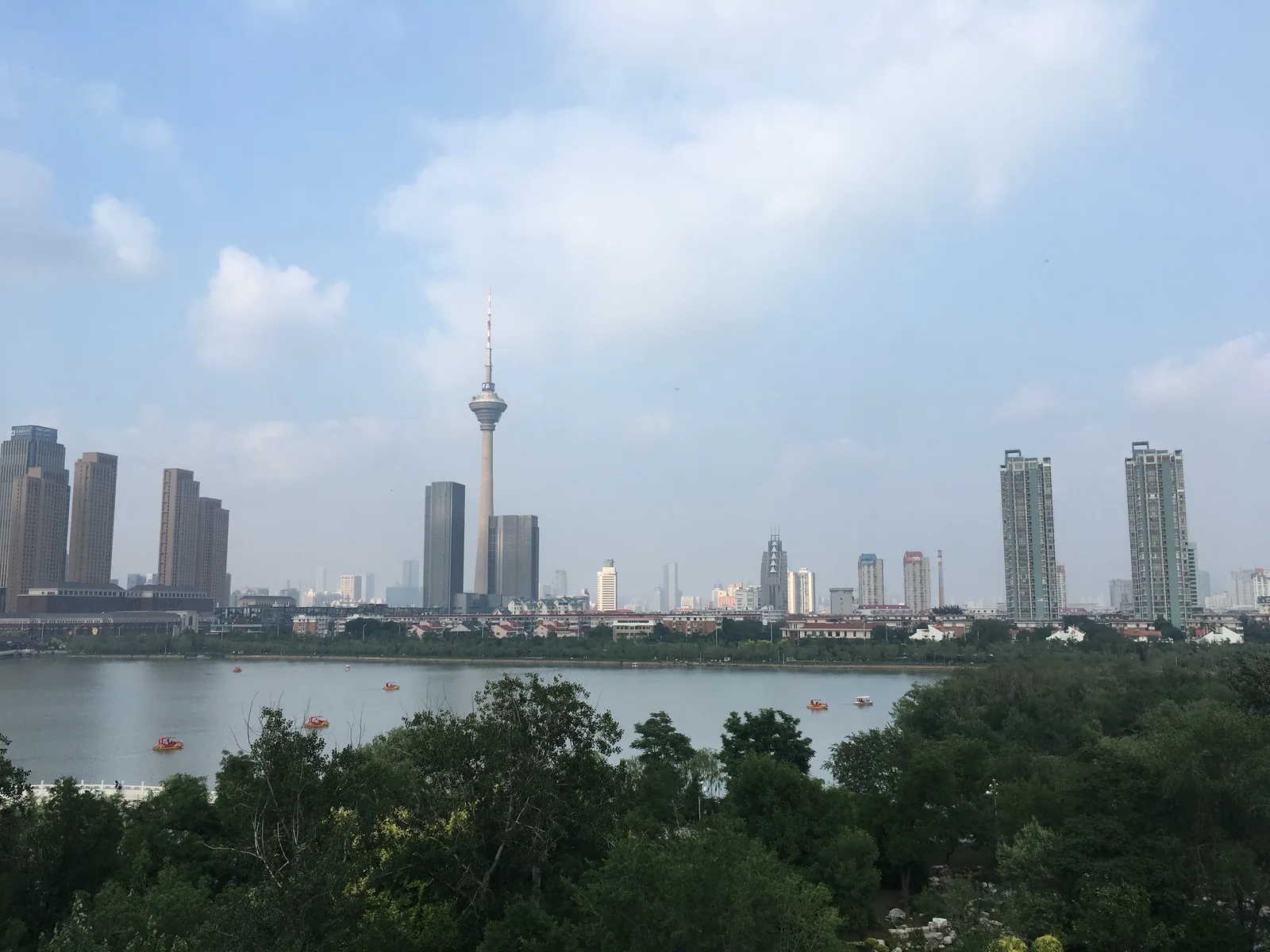
The river as an urban thread
Modern Tianjin continues to build around the river, universities and a large industrial-commercial base. The most useful way to see it is by contrast: historic streets in the morning, riverfront at dusk, then a local meal that does not need ceremony.
Good to know
Walk residential streets
For a one-day visit, choose a walk in the Five Great Avenues, a local meal and one Hai River section. Leave time for the journey to and from your arrival station.
Eat simply
Leave time for breakfast or snacks between walks. Check the menu and price before ordering rather than fitting every meal around another attraction.
Use the river
For an overnight stay, compare the hotel’s access to your chosen river walk and station. For a Beijing day trip, confirm both trains before fixing the sightseeing plan.
A closer reading
Five lenses on Tianjin.
History
The long view
Culture
Everyday culture
Landscape
Ground and horizon
Food
At the table
Now
A city in motion
Watch
See Tianjin in motion.
A visual companion selected for its places, people and everyday pace.
Plan with ChinaVela
Travel deeper, with the right local context.
Talk to a travel specialistPlan your visit
Other city guides: Beijing city guide · Datong, Shanxi city guide.
All China city guides · Explore China journeys · Before you go to China